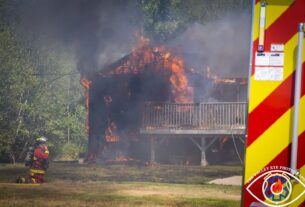
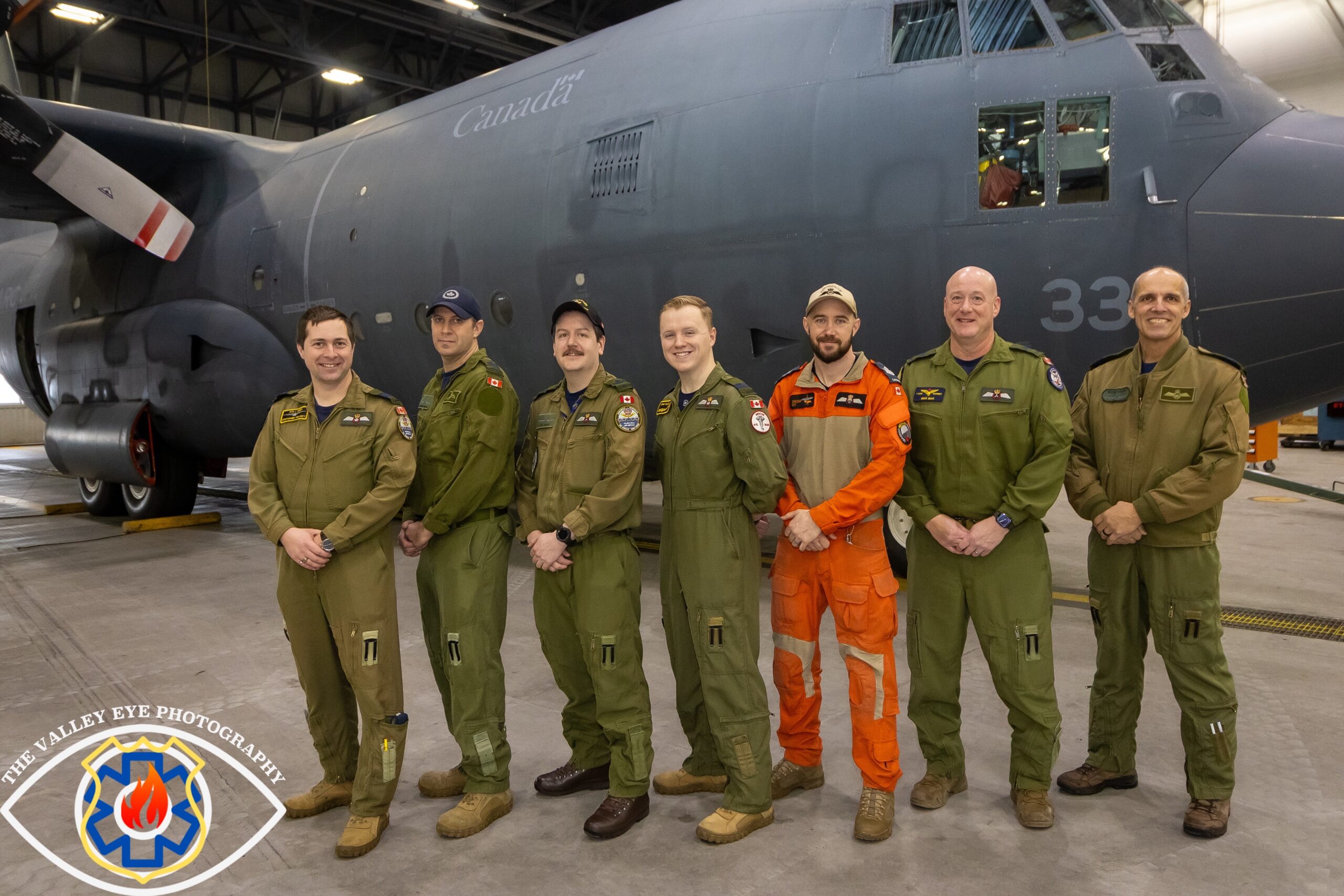
For decades, residents living within the core of the Annapolis Valley have become all too familiar with the roaring sounds of the CC-130H Hercules. An airplane that has been providing search and rescue operations throughout Canada since the 1960s and soaring the skies of its home, Greenwood, since 1991.
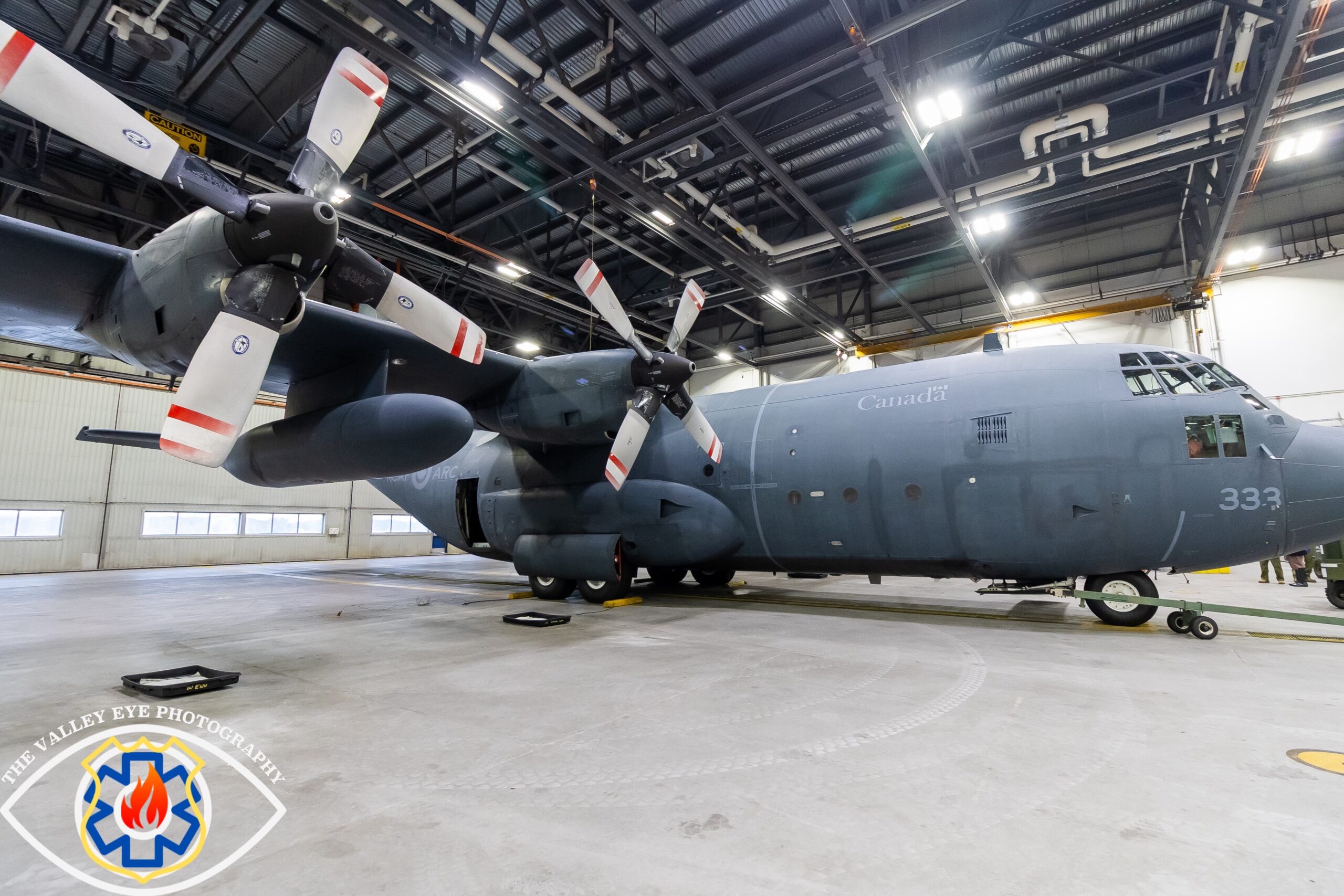
Pictured the CC-130H Hercules.
The final plane of its kind in Greenwood, 333. Tenure has officially come to an end, despite it not wanting to leave when scheduled. The new CC-295 Kingfisher will be taking its place following decades of service.
“Our response will still be the same. We’re here to provide search and rescue capabilities for Canadians all across the country. We’re still going to deliver on that and the new CC-295 Kingfisher will allow us to do some aspects of our job a little bit better.” Stated Major Kristopher Kelusky, pilot, aircraft commander of the CC-130H Hercules.
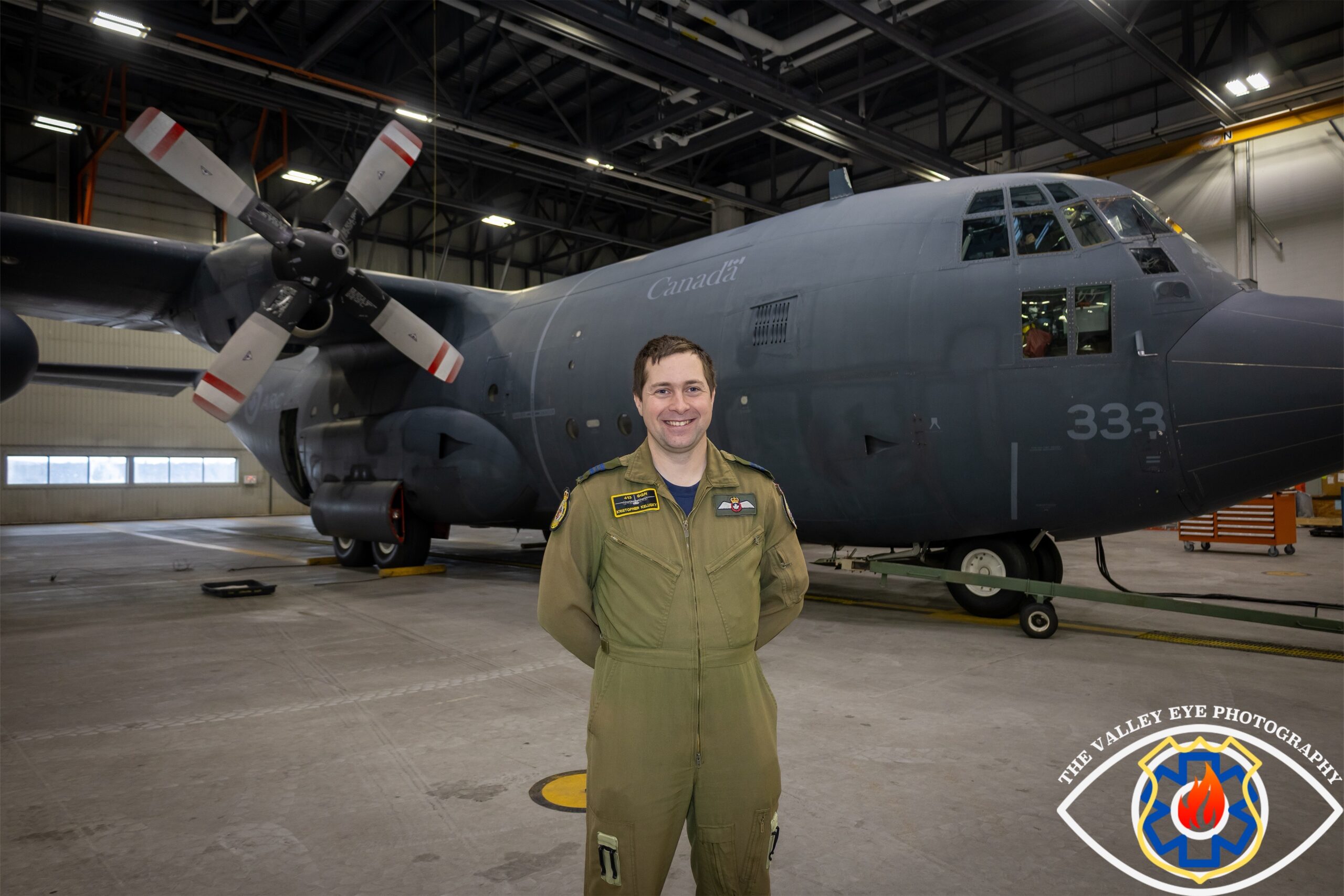
Major Kristopher Kelusky, Hercules Pilot & Aircraft Commander also
Deputy Commanding Officer of 413 Squadron pictured with the Herc.
For the 16 years that Major Kelusky has served in the Royal Canadian Airforce, 5 of those have been with the crew of the Herc.
Overtime, the 413 Transport and Rescue Squadron has had 3 Hercs assigned to them and, in some cases, as many as 4 aircraft were positioned at 14 Wing Greenwood. This was all dependent on maintenance and how the fleet was being managed.
Describing some of the capabilities during search and rescue missions, the plane has been robust and flexible, flying at low altitudes, through hurricanes and providing transport during its decades of operations.
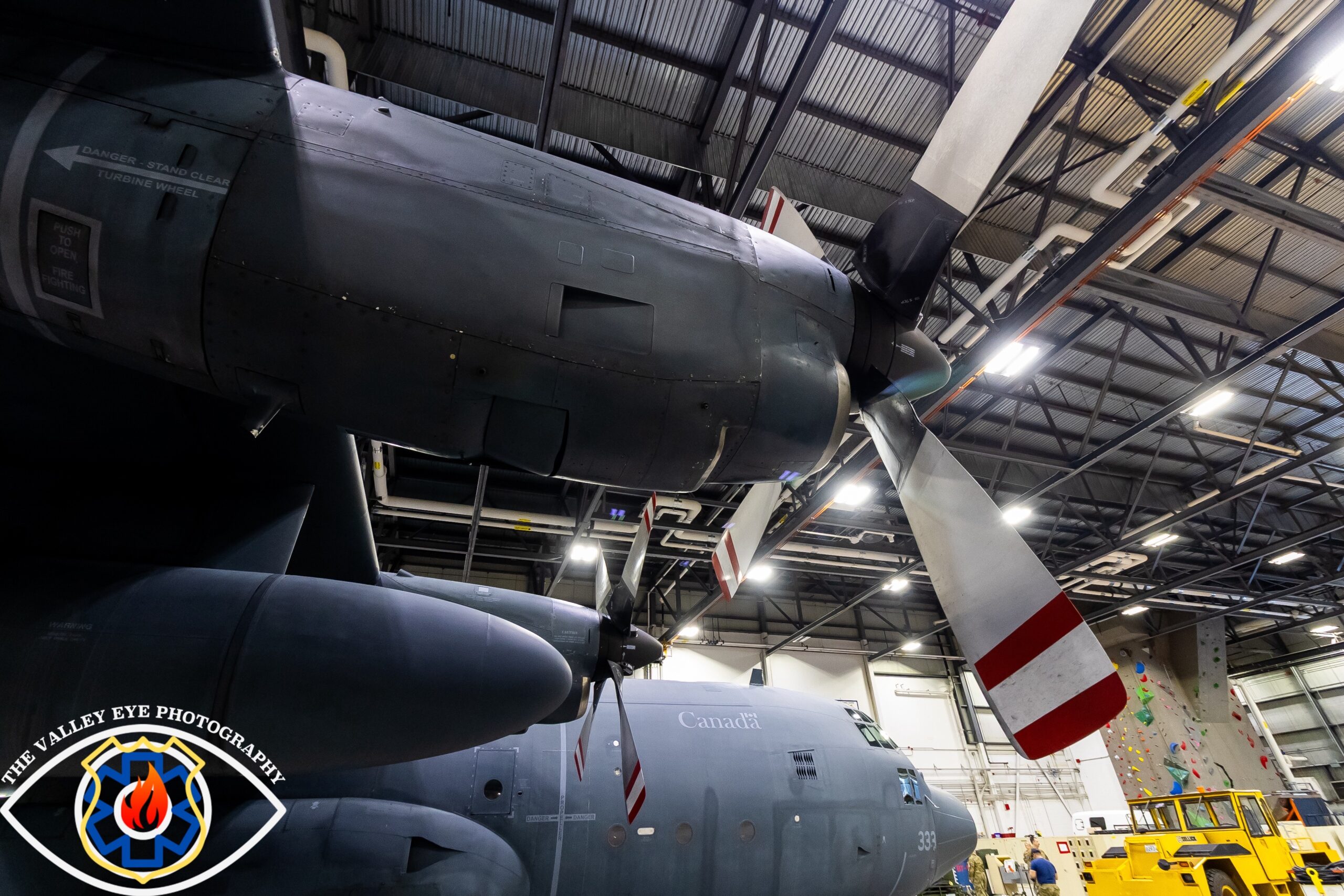
Like any aircraft, age makes it harder to service and maintain, resulting in a number of limitations.
With the end of the Hercules era, it falls in line with Kelusky, as he won’t be transitioning to the Kingfisher. He will be receiving a new posting this summer.
Marking it’s soon to be last flight from Greenwood, this will become a memorable moment in his career.
“It’s sad to see it go, but I’m glad I’ll get to see it out on its last flight from Greenwood.” Shared Kelusky.
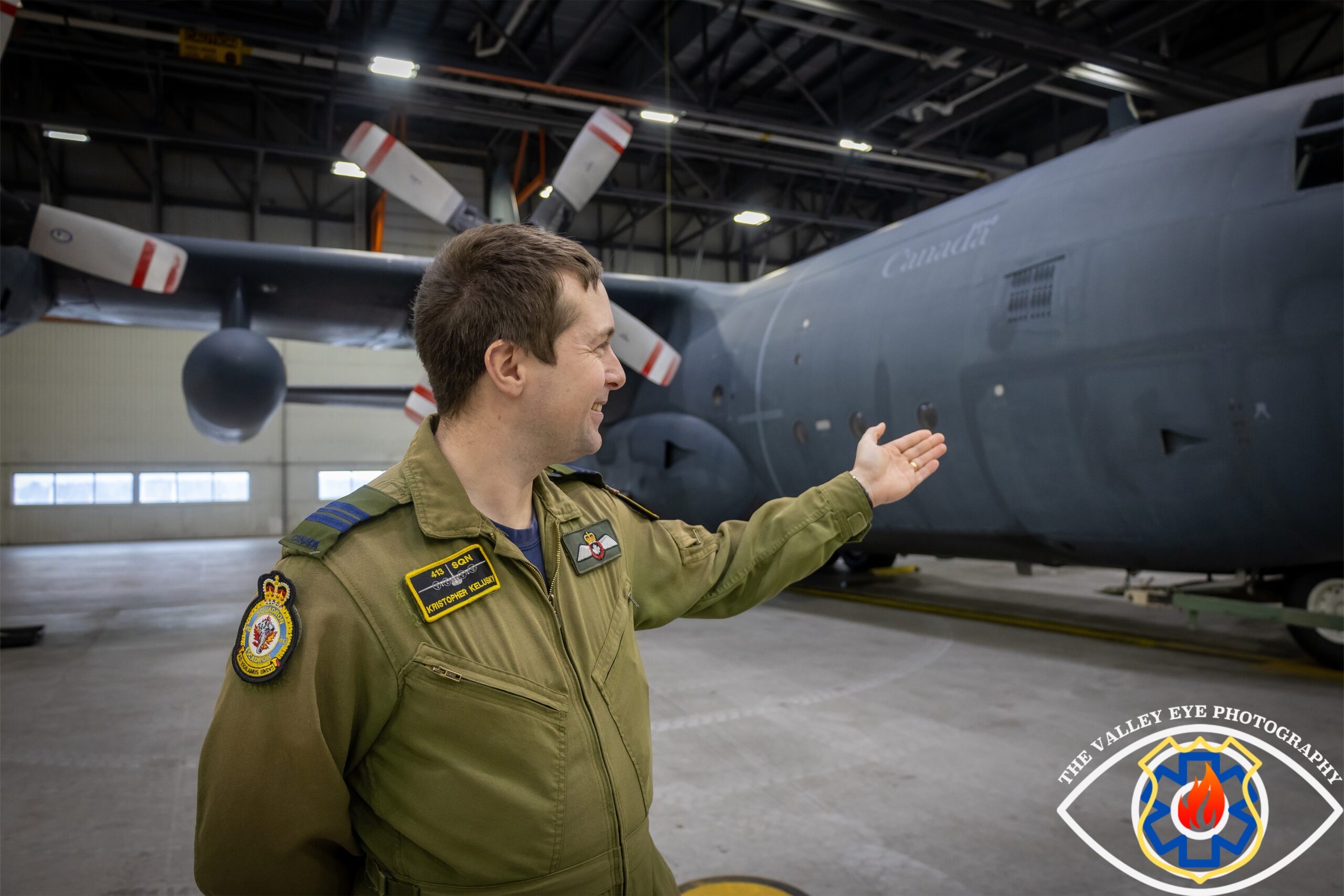
Major Kelusky sharing a view of the Herc 333 during a media day at 14 Wing Greenwood.
It will also be a change of scenery for local residents. The robust grey airplane that regularly flies through the skies of Greenwood will be another picture in history, with a yellow, more modern version of a search and rescue plane, flying through the Annapolis Valley and beyond.
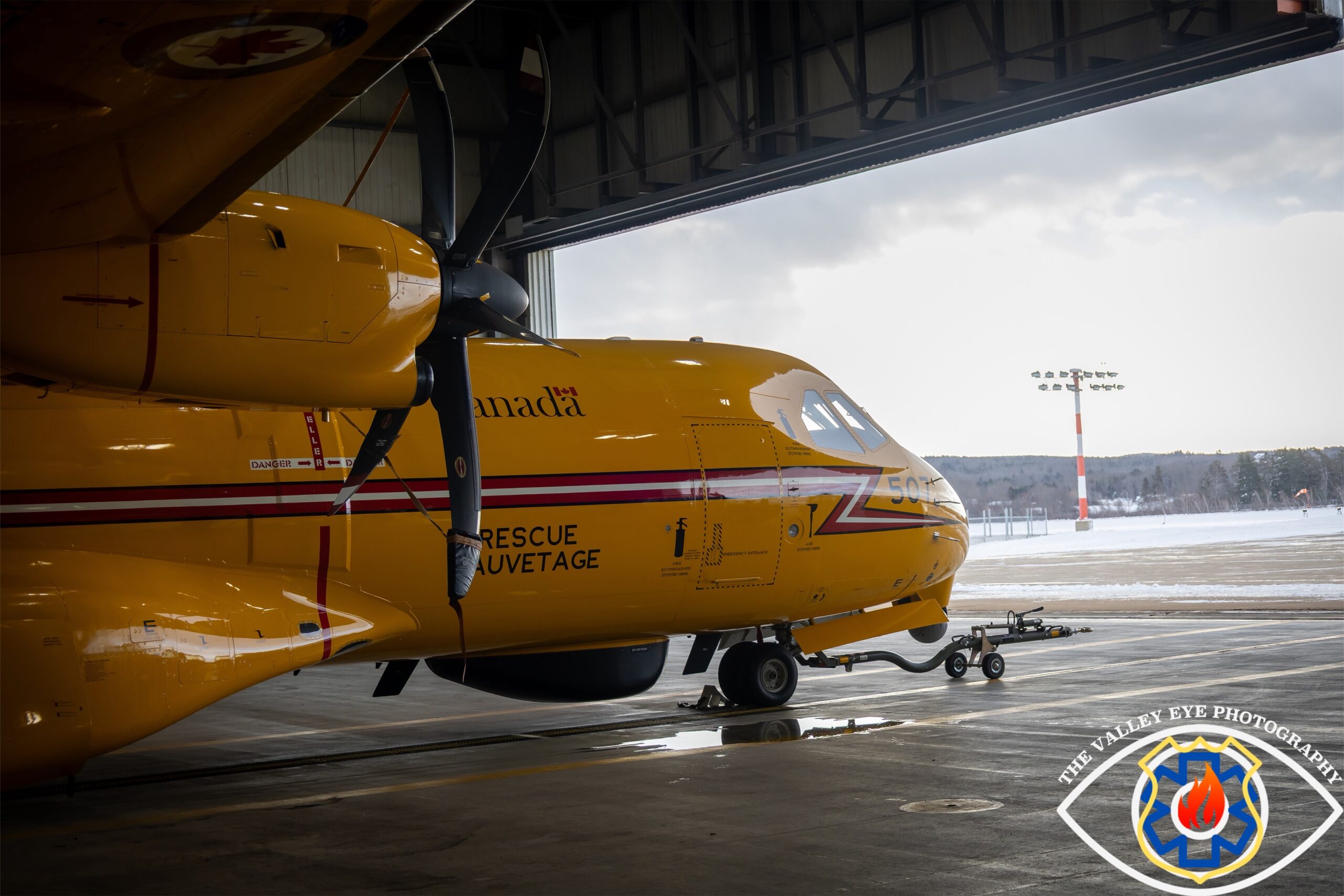
The new CC-295 Kingfisher at 14 Wing Greenwood.
Its home, since 1991, has been with the 413 Transport & Rescue Squadron at 14 Wing, where its role was to provide search and rescue operations and transporting supplies.
The Hercs versatility helped shape search and rescue as it is today, providing an array of support. When it wasn’t transporting goods, it was saving lives.
The hallways at the 413 Squadron paint that picture. Dozens of missions featured along the walls, from successful and heroic rescues that crews performed with the support of the Hercules.
Over the Hercs posting, it aided in a number of missions from marine, air or ground emergencies, ultimately capable of deploying life rafts, flares for visibility, spotting and searching for victims while using onboard equipment to locate subjects.
These same objectives and missions will roll over to the new Kingfisher with newer and more modern technology.
“The big thing is the technology that we have on board. On the Hercules, the engines are all analog controlled, so it’s all bell cranks, pulleys, that connect to the power levers all the way into the throttle controls on the engines.” Shared Captain Ethan Williams, pilot of the Hercules and first officer on the Kingfisher.
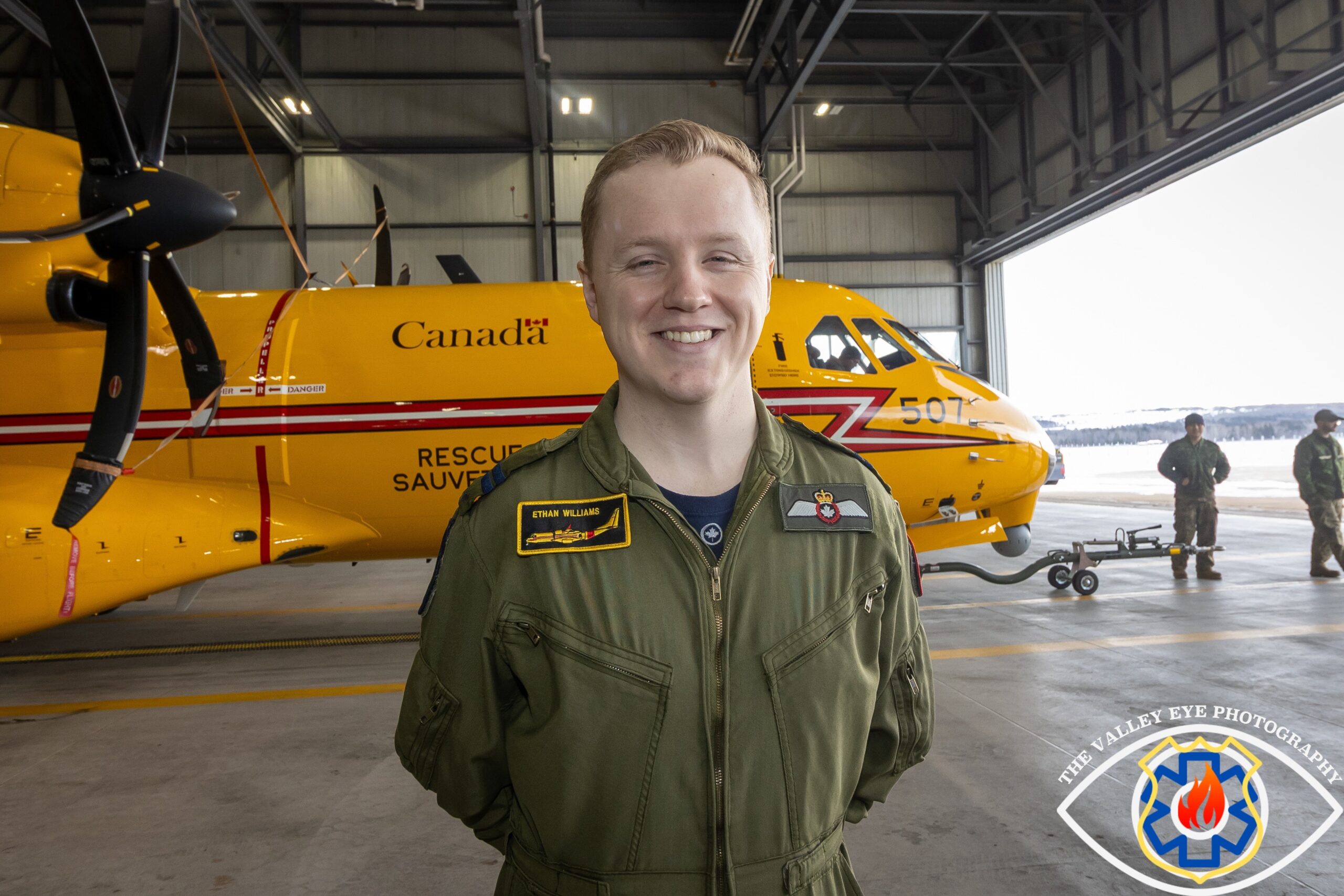
Captain Ethan Williams standing in-front of the Kingfisher at 14 Wing.
Williams spent approximately a year flying the Hercules and has transitioned into being a pilot on the Kingfisher, following 4 months of training in British Columbia with colleagues who are also transitioning.
There is lots of excitement around the three new CC-295 Kingfisher search and rescue planes on the base and their unique features compared to the Hercules.
“Everything on this plane is computer controlled. On the Herc, we had to be very careful on takeoffs and even just flying around so we didn’t over torque the engines. With this new aircraft, it takes a lot of the load off of us as pilots, in terms of managing the performance of the aircraft.” Williams shared on the CC-295 Kingfisher.
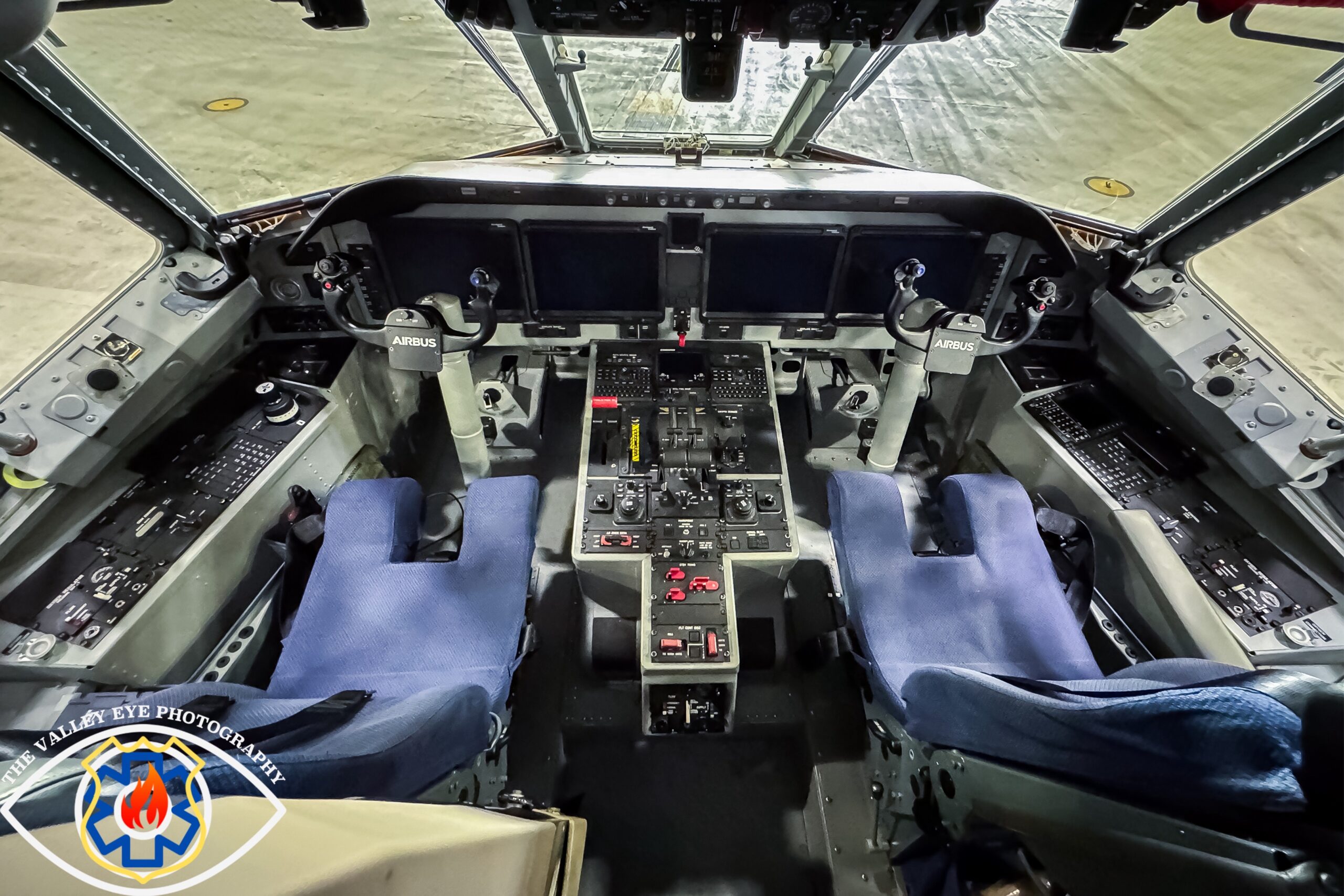
The cockpit of the CC-295 Kingfisher.
The flight performance on this particular plane isn’t the only upgrade. The Kingfisher is also equipped with integrated sensors that allow crews to locate people or even objects from 40 kilometres away, even in low-light conditions.
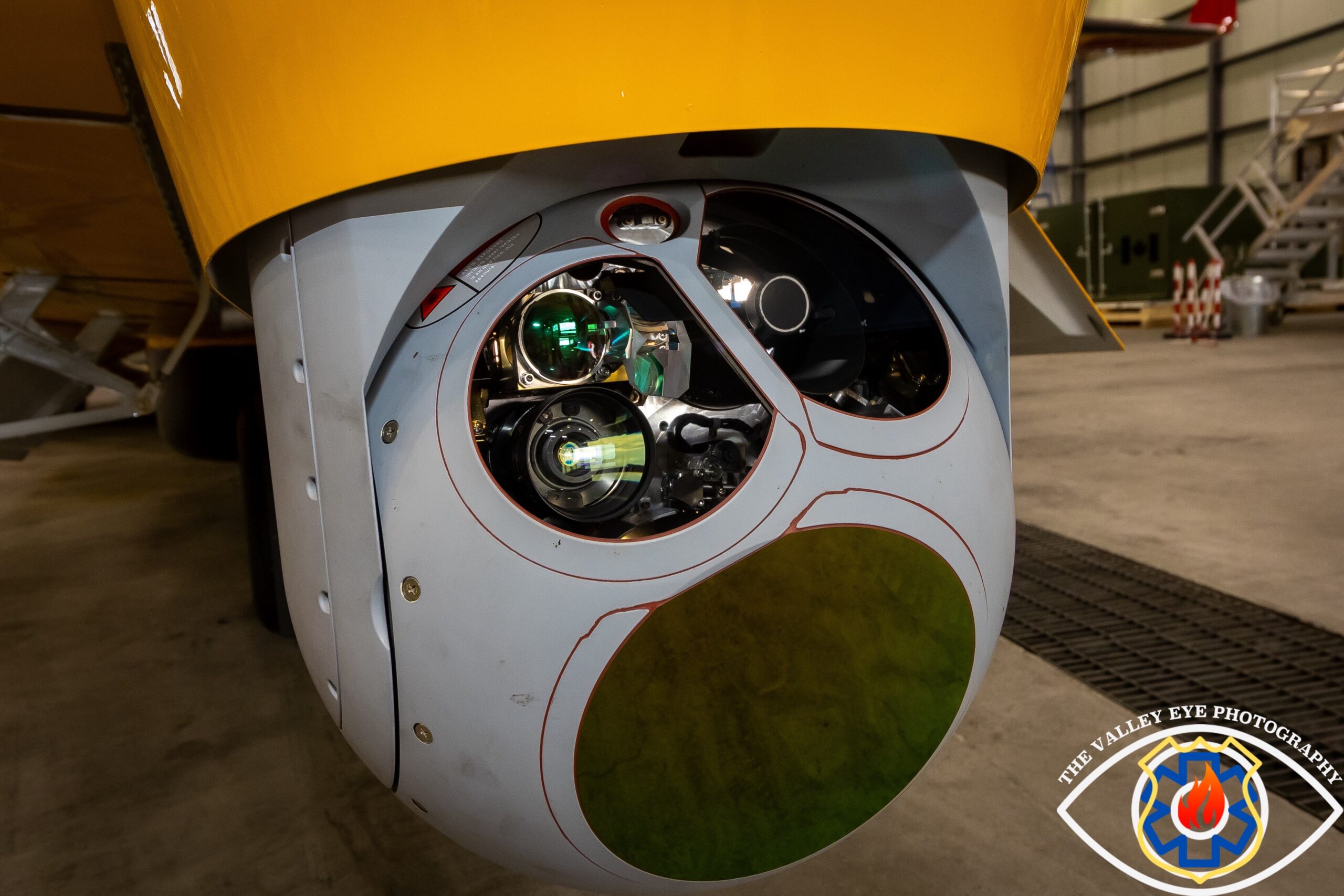
Advanced cameras and sensors positioned on the front of the Kingfisher.
With its new modern design, the fixed-wing assets like the CC-295 Kingfisher play a vital role in supporting search and rescue missions alongside its partner the Comorant. Providing “top cover,” which means acting as a communications platform, keeping tabs on fuel management, dropping supplies and deploying technicians.
The Kingfisher is capable of flying 4,500 kilometres with a maximum speed of 468 km/h and a gross weight of 23,200 kilograms.
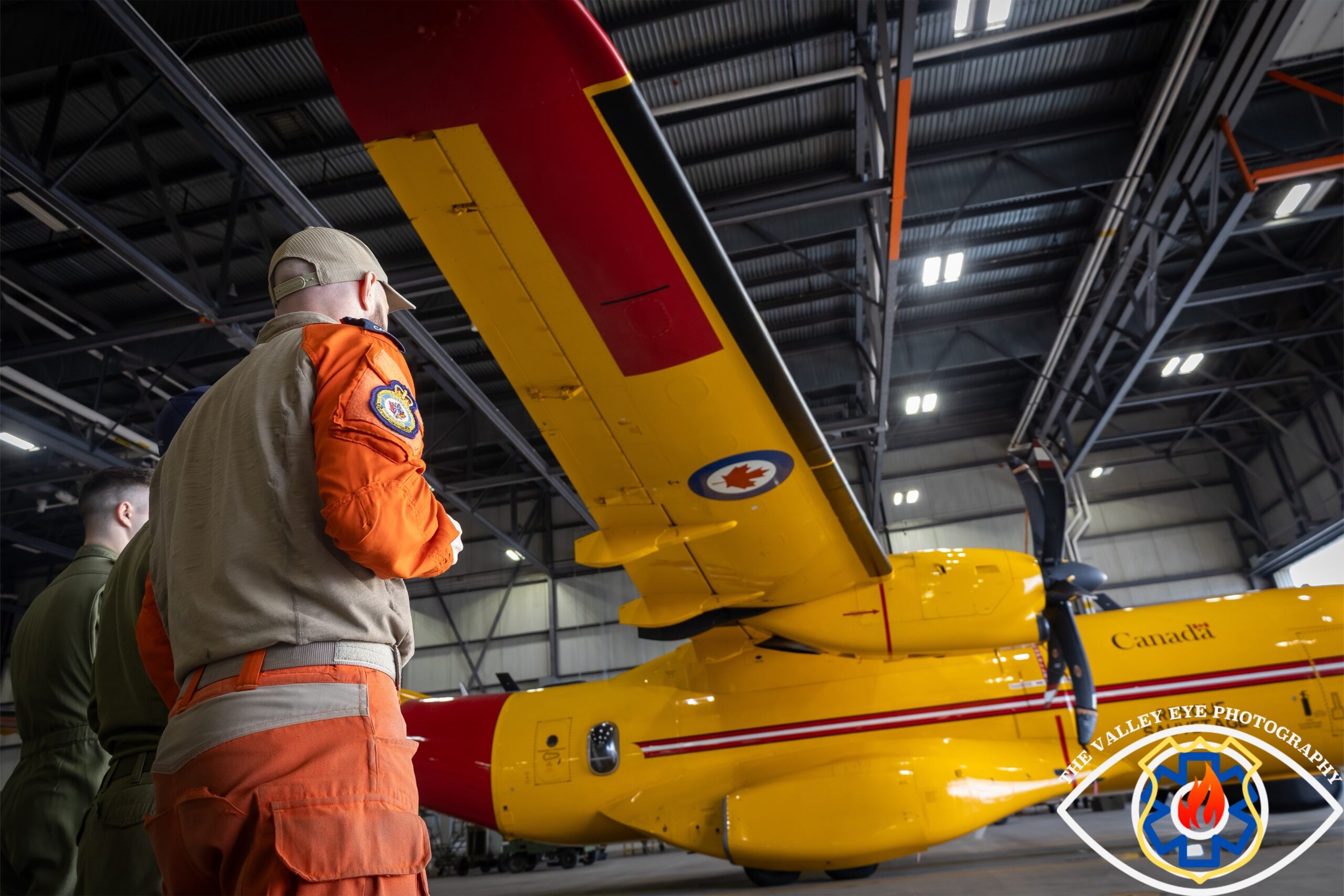
Its sensors have capabilities to detect and identify objects, including heat radiation during searches where vision may be obscured, identify and locate transponder-equipped ships and a camera that allows for more efficient search and safer flying, reducing the requirements for descending to lower altitudes.
The Kingfisher is designed slightly smaller than the Hercules with a limitation to the equipment like flares and transporting space on board. It will still carry all the appropriate life-saving equipment that is necessary, but its transport space has been cut down.
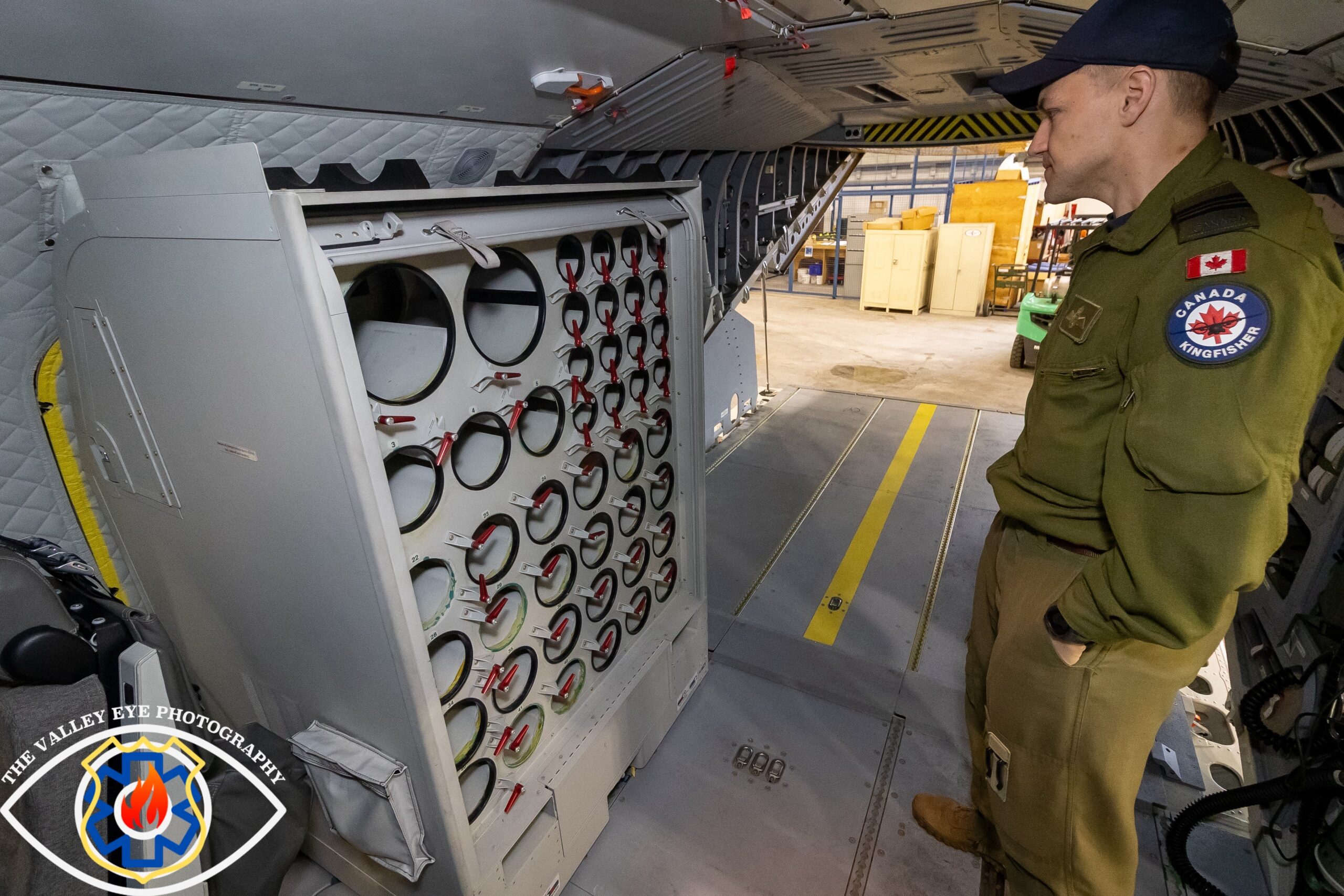
Major Matt Sinasac, Air Combat Systems Officer, also called Tactical Coordinator or (TACCO)
pictured with compartments for flares on the Kingfisher.
Even with the limited space, standards and training have evolved over the years, with technology enhancing efforts and reducing time and equipment during missions.
With any airplane, especially in search and rescue, it is made possible by a crew of personnel who all serve a specific purpose in its operation.
The pilots fly the plane, working alongside the Tactical Coordinator who is in charge of the operation during missions. The Sensor Operators who are dedicated to using advanced integrated sensors on board the aircraft to aid in locating subjects. The search and rescue technicians deploy equipment, search from the sides of the aircraft and are fully trained to parachute off planes to provide life-saving techniques on the ground.
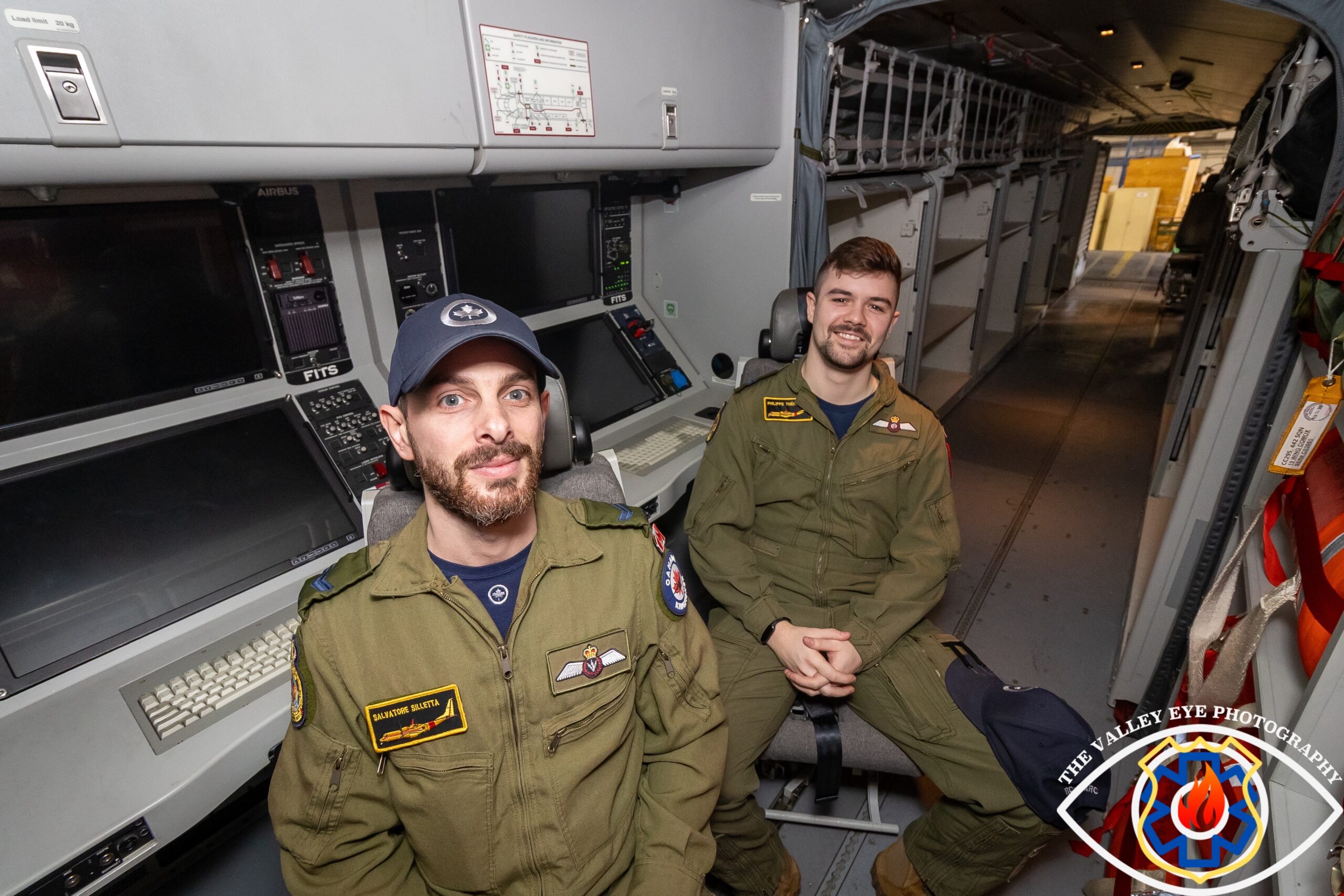
Corporal Salvatore Siletta, Sensor Operator & Lieutenant Phillippe Therien, Tactical Coordinator (TACCO)
Posted at there stations on the Kingfisher.
With the Herc going into retirement, so will two other positions. The Flight Engineer responsible for the maintenance and repairs and Load Masters who knew the aircraft in and out while being in charge of loading supplies, will not transition from the Hercules to the Kingfisher. Ultimately, phasing out these roles that are recognized by high-ranking officers as an asset and valuable service to the everyday operations of the Herc.
“They knew their job so well, and they’re so good to work with. You can have the pilots and the other crew, but without the Load Masters and Flight Engineers it wasn’t a Herc.” Expressed Captain Ethan Williams.
Sounds of the roaring Herc will fade into obscurity across the Annapolis Valley while our everyday lives go on. Its new replacement will take its place flying the skies and saving lives for years to come.
With this safer and efficient search and rescue plane, it’s bringing changes to the 413 Squadron that will save time with improved sensors, cameras and radar when finding Canadians in distress.
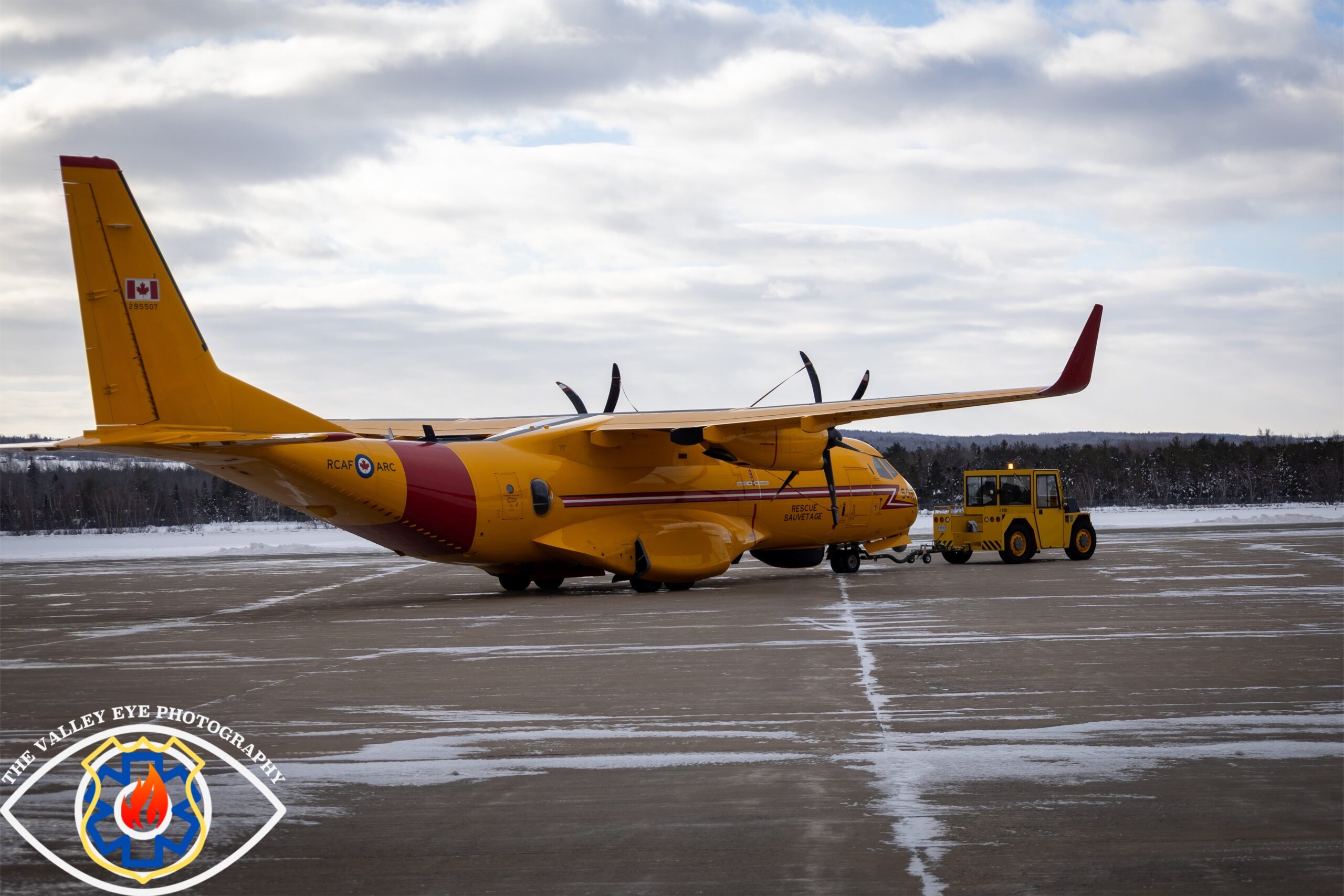
The CC-295 Kingfisher at 14 Wing Greenwood.
As we move forward into a more modern and dynamic search and rescue world locally by welcoming the Kingfisher, we thank the 333 Hercules, its crews and its decades of flight time to Canada and most particularly Greenwood.
Adrian J.