I’ve received many messages over the last 24 hours about the wildfires in Lake George & West Dalhousie.
While both fires are still active, work continues to bring them fully extinguished. These efforts will most likely continue for some time, potentially into the spring.
My updates will not be necessary at this time, unless a shift in conditions or classifications take place.
Below are small recaps and updates on each fire to date.
⚠️ Please Note: Not all information may be contained as there is too much to cover at this current time.
🗺️ West Dalhousie / Long Lake / Aug 13th
✅ Classified as Under Control
🔥 Estimated at 8,468 Hectares
⤵️
It was reported on August 13th after lightning impacted the immediate area.
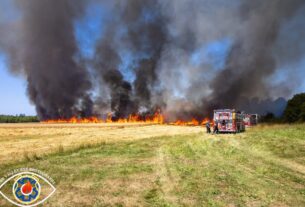
Crews were fighting two small separate fires in Lake Paul, Kings County, both as a result of lighting, when the West Dalhousie wildfire was reported, diverting a helicopter from Lake Paul to the new fire in Annapolis County.
The fire is presumed to be a result of lightning, which had impacted the area during extreme drought conditions.
Volunteers alongside DNR found the fire in the late evening hours but were unable to begin suppression efforts by ground due to dusk and fire activity.
Emergency alerts were issued for prepare to evacuate and the following morning crews returned which resulted in mandatory evacuations. This forced residents from their homes, some for over a month.
Dozer gaurds worked to get ahead of the fire bringing in a plethora of heavy machinery.
All evacuated residents have since been able to return, who are able.
Financial assistance was also announced by the Nova Scotia Government, with many donations and acts of support from across Nova Scotia for the efforts and evacuees of West Dalhousie.
Work still continues in the area with Nova Scotia DNR working hot spots within the perimeter of the fire. Contracted helicopters have also been flying over checking for hot spots when required.
During the Long Lake Wildfire, a total of 77 fire departments assisted with fire efforts on the ground, marking the largest scale fire response in Nova Scotia’s history.
Out of area resources have also been assisting with thermal drones to help detect hot spots.
There were 505 civic addresses evacuated forcing over 1000 people from their homes.
One Department of Natural Resources helicopter crashed while actively bucketing the fire in a nearby lake. The pilot was transported via helicopter to hospital and survived the crash.
Aircraft from Quebec, NWT and Alberta all assisted while also battling out of province fires. Contracted helicopters were also brought in with assistance from the federal government.
For the first time in Nova Scotia history, sprinkler protection equipment was activated, foreign to many volunteer firefighters but ultimately paying off, saving dozens of homes in the Community of West Dalhousie.
Out of the 88 homes that were equipped with sprinkler protection, 85 of those were saved, with three being lost.
Unfortunately, twenty homes and 11 outbuildings in total were lost as a result of extreme fire behaviour. No injuries were reported and evacuation measures were taken well in advance before the fire threatened any homes.
Woods restrictions and burn restrictions continue for Annapolis County while travel is permitted in other counties across Nova Scotia.
The area has since re-opened for public access and smoke has been seen and smelled on numerous days.
Many residents continue to pick up the pieces, struggling each day to process the events that have unfolded within their communities and are anxious as smoke rises from time to time in the area.
Our continued thoughts and best wishes to all those impacted continue and we thank all the firefighters for their heroic efforts.
🗺️ Lake George Wildfire / Sept 28th
✅ Classified as Being Held
🔥 Estimated at 288 Hectares
⤵️
Aylesford Road remains closed between the Fox Mountain Campground & North River Road at this time.
North River Road has re-opened and is flowing as normal.
All 353 properties that were evacuated in the communities of Lake George, Morristown and Aylesford Lake have been able to return as of yesterday.
There is a low risk to other homes and structures in the area.
There is a possibility the fire can still grow beyond its estimated 288 hectares. The smells of smoke and visible smoke is still possible as the fire is not fully extinguished.
Nova Scotia DNR alongside BC wildfire crews continue working to bring the fire under control with support from aircraft.
The wildfire in Lake George was reported on September 28th, which was spotted by a plane and located by volunteers. The fire was brought to being held with the support of four NWT 802s a helicopter, DNR staff and volunteer firefighters that very night.
The fire was then reverted back to out of control on September 29th in the afternoon, ultimately jumping the Aylesford Road, spreading and threatening, homes, cottages and camps in the community of Lake George.
DNR is confident the Lake George Wildfire was human-caused. Conservation officers were in the area and investigated but the exact cause could not be determined due to a lack of evidence.
Thankfully four NWT 802 skimmers were still on loan to aid in the Long Lake Fire effort and were deployed to Lake George.
In addition, two water bombers from Quebec assisted multiple times and two additional NFLD water bombers aided. Contracted helicopters were also brought in for support.
There were a total of (7) Emergency alerts issued to Kings County residents as a result.
Heavy machinery worked alongside crews and aircraft to prevent the fire from threatening homes.
In total 17 volunteer fire departments assisted with the ongoing effort.
Thankfully there have been no reports of any damaged structures despite the large evacuation notice. This precautionary measure certainly helped aid in the fire effort.
Financial assistance was also announced by the Nova Scotia Government, with many donations and acts of support cross Nova Scotia for the efforts and evacuees of Lake George.
As a result of the wildfire in Lake George the wildfire season, which typically ends on October 15th, has been extended to October 31st.
🎬 Final remarks:
Fires burning this late into the year are extremely uncommon and have never been seen before in Nova Scotia, making our wildfire season, one like no other, expecially in our Annapolis Valley.
Our thanks goes out to all the volunteer firefighters, Department of Natural Resources Staff, volunteers within our communities, heavy machinery operators and dozens of different agencies in province and out of province who contributed to both the large scale fires in Annapolis & Kings Counties.
It’s been an unprecedented year with our drought conditions resulting in extreme fire behaviour.
We continue to thank and support all those who aided, the acts of kindness from all Nova Scotians, is something we are known for.
Adrian J.