
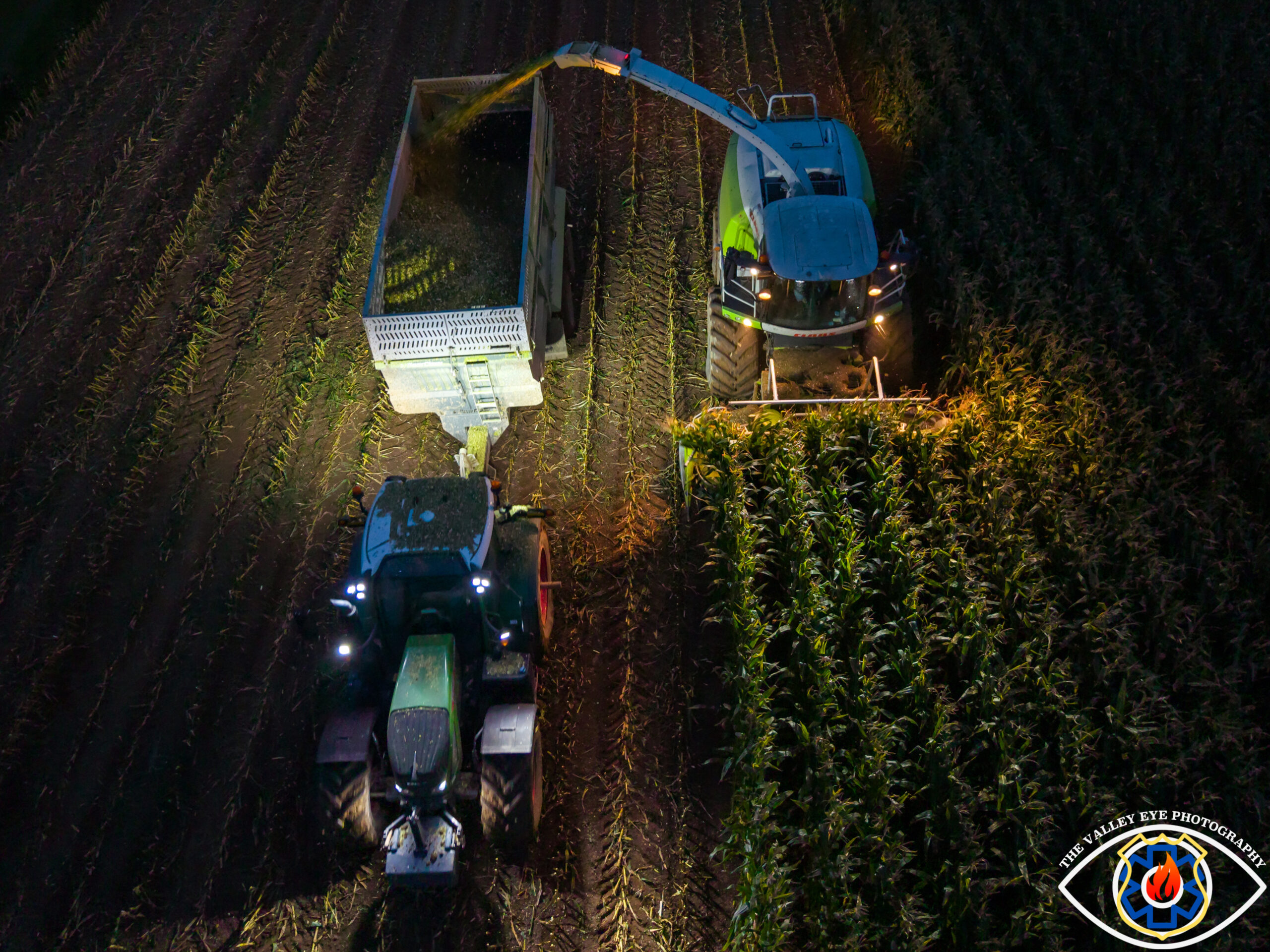
Every year around the beginning of fall, farmers hit the fields to harvest corn!
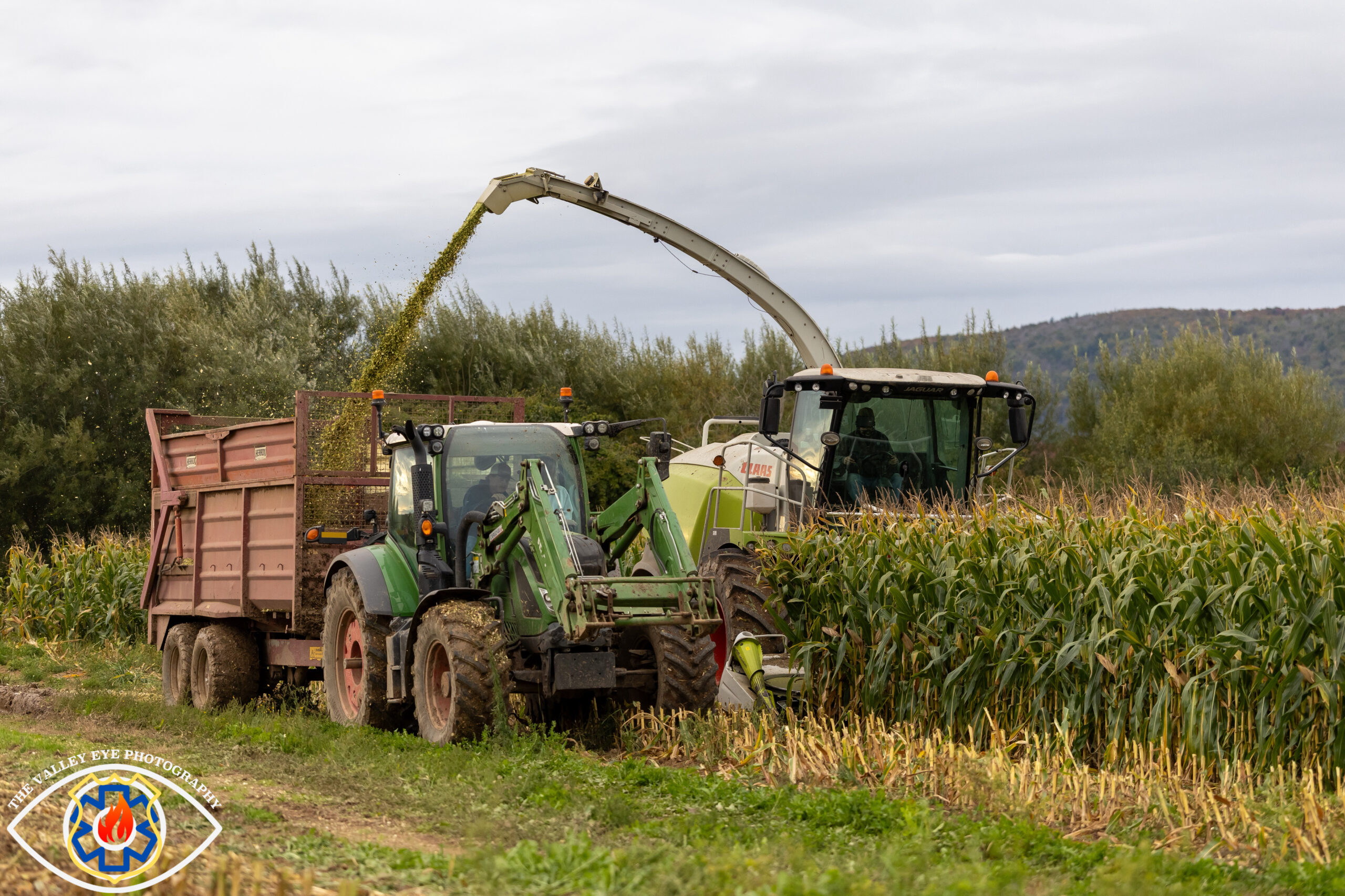
There are two ways to harvest, chopping corn for silage and the traditional corn grain harvest. Each method is done at completely different times and their yield destinations differ greatly.
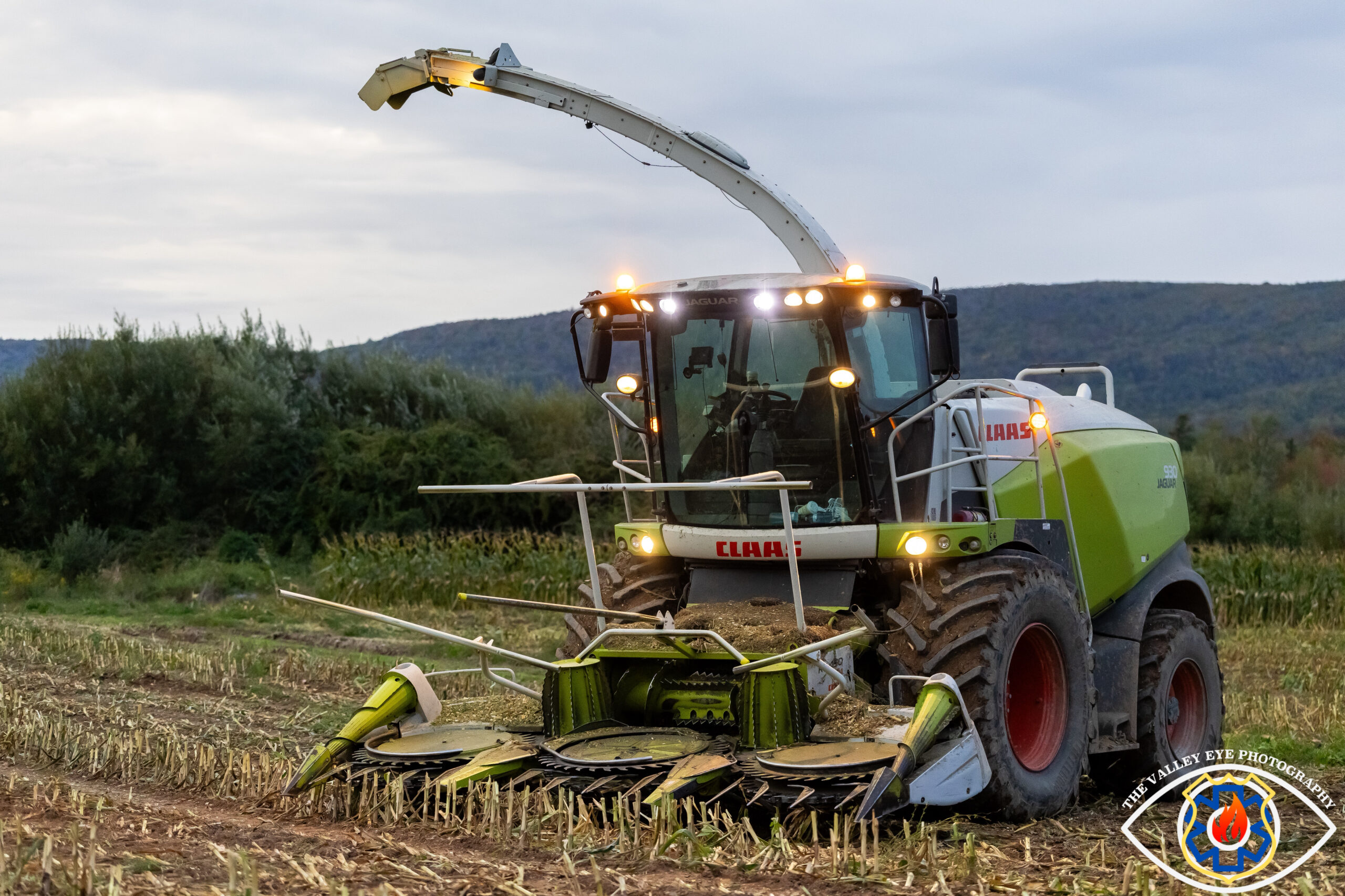
Many farms like the family-run James R. Ward Farm Incorporated, based out of Bridgetown in Annapolis County, relies heavily on corn silage to raise their dairy cattle.
I was able to catch up with them last week, learn the process around this style of harvest and its crucial role around the production of milk.
The corn they were harvesting was corn silage, this process harvests 100% of the plant, from the leaves, stalk, and corn while the traditional harvest only takes the corn kernels.
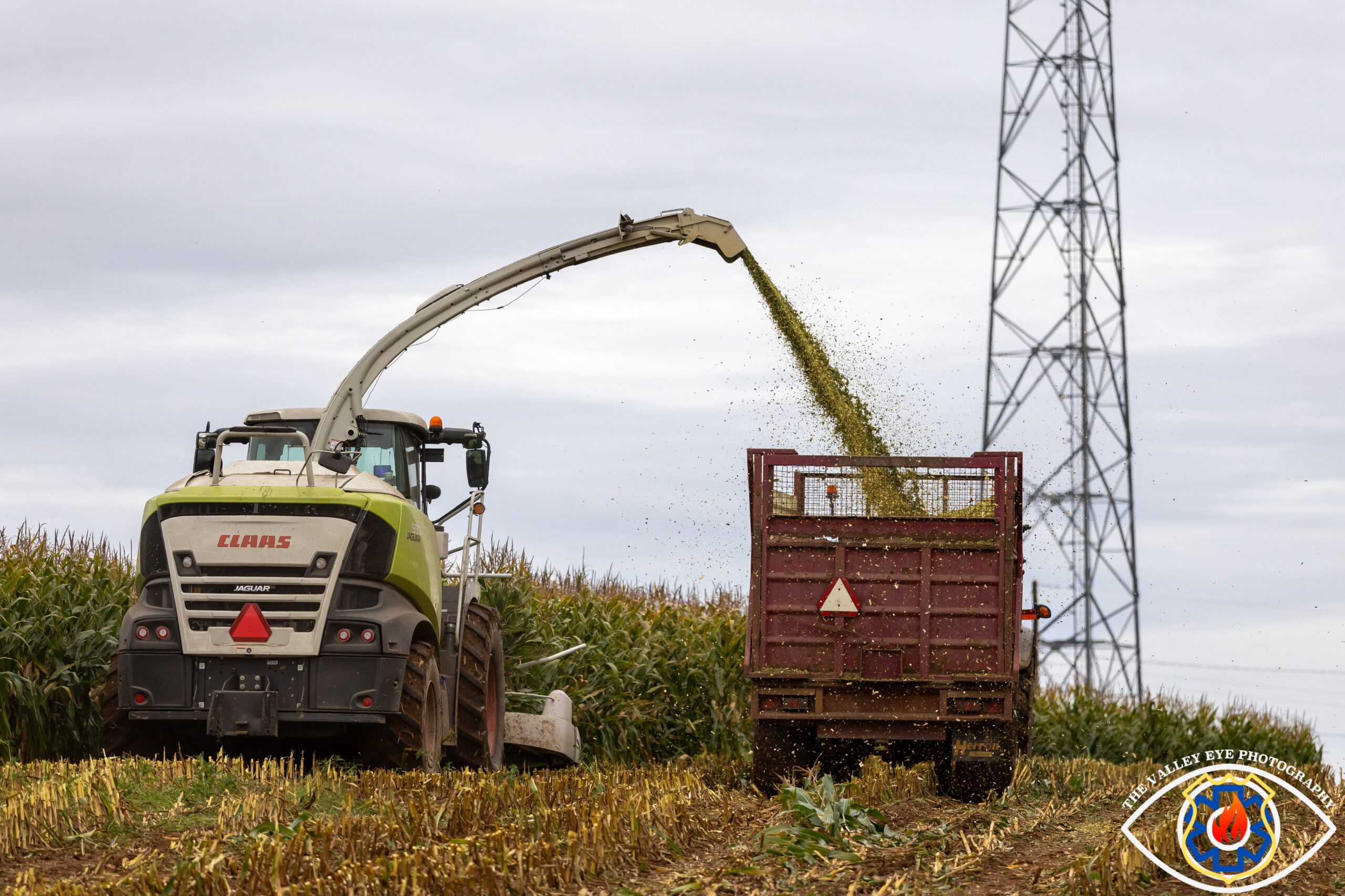
When combines harvest the corn kernels during a traditional corn harvest, it’s done much later in the fall, when the plant is drier and contains a much lower moisture content.
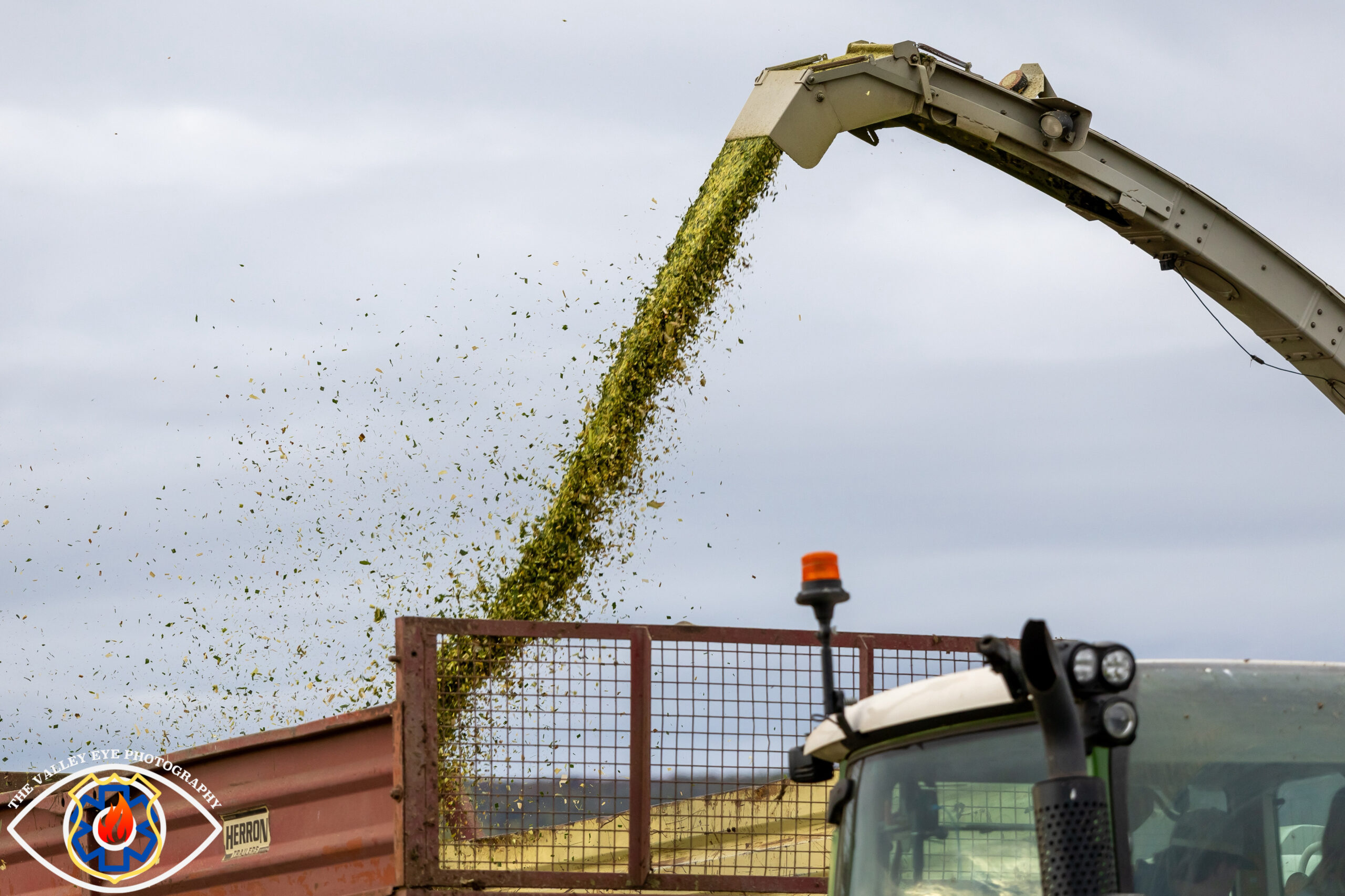
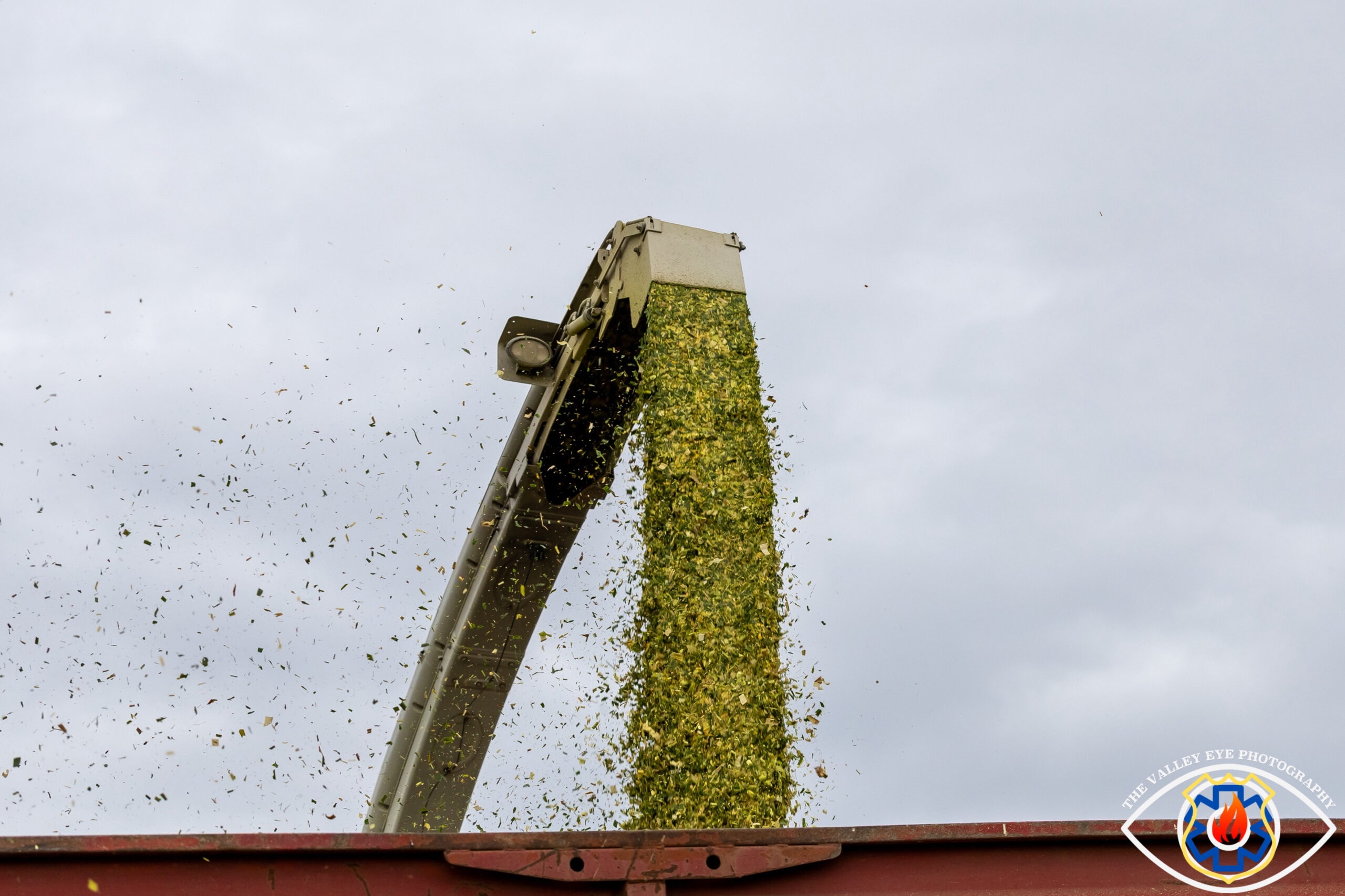
Corn silage, on the other hand, is harvested with a much higher moisture content, harvesting the plant from just above the ground to the top of the corn stalk. The harvester chops it up, feeding it into a dump trailer where transport tractors then take it directly from the field to a nearby farm, to be stored for dairy or beef cattle as livestock feed.
The chopped-up material is off-loaded at its farm location, where it gets spread out and tightly packed into bunker silos.
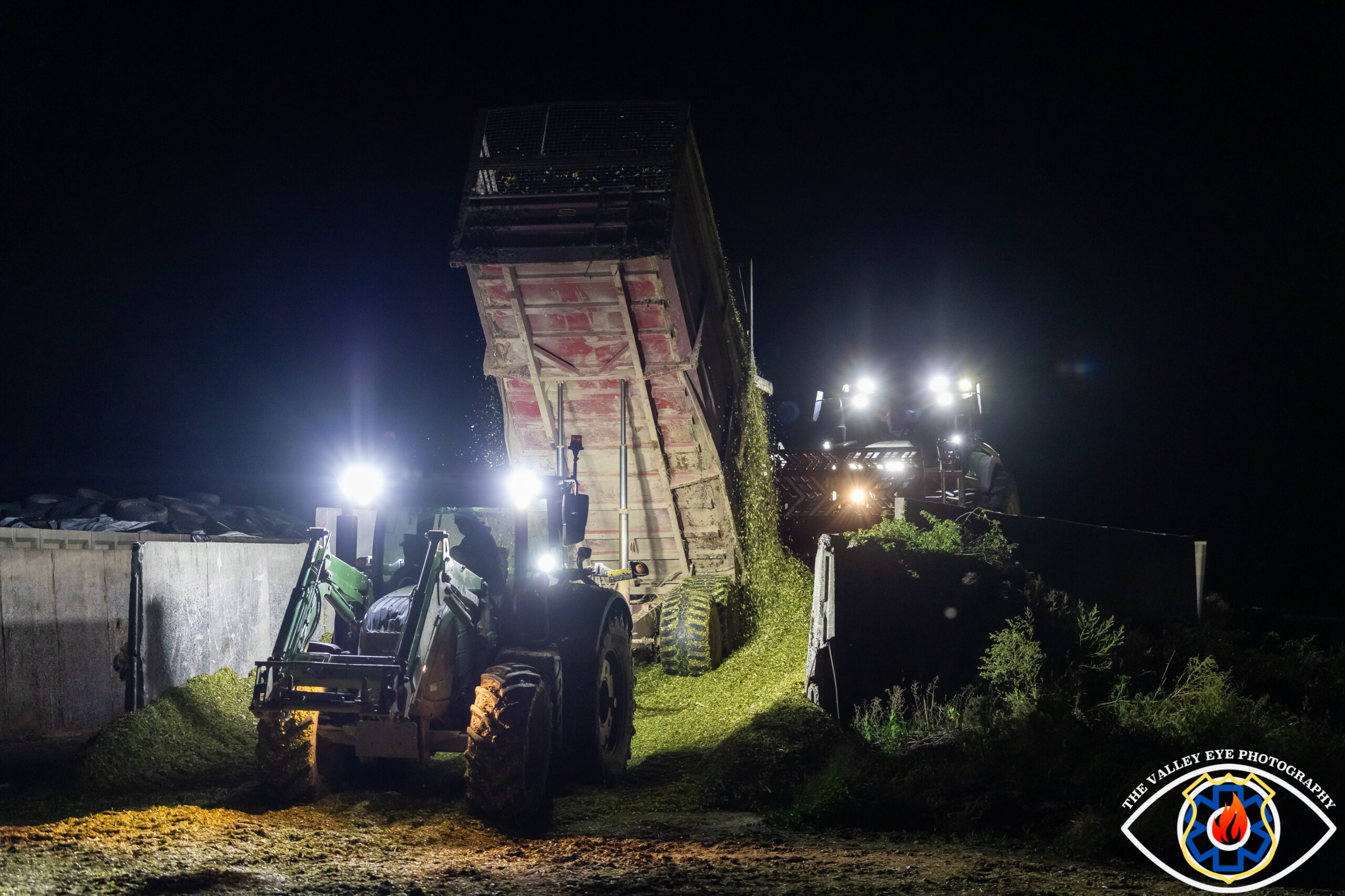
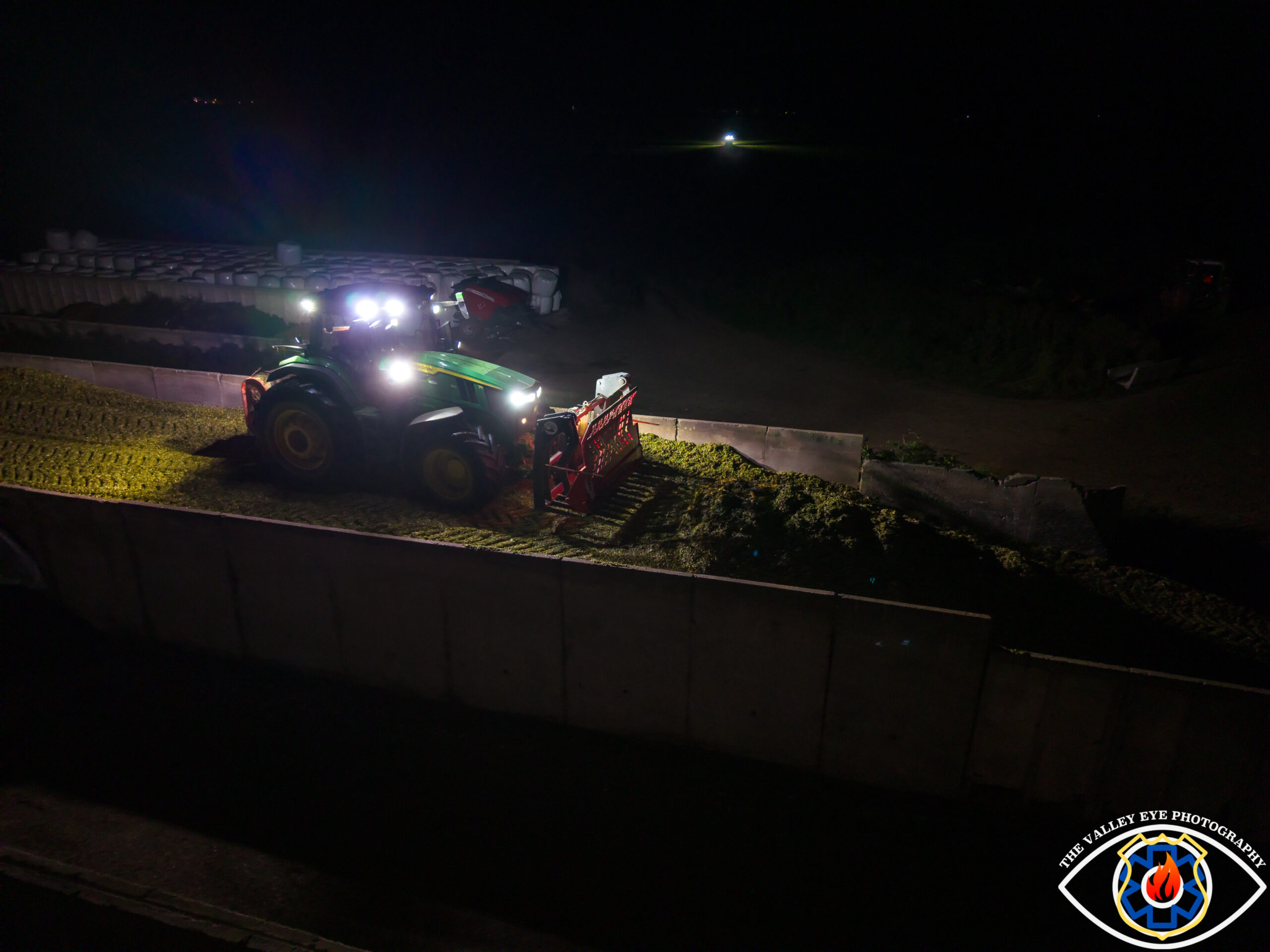
Tractors continuously drive over the chopped-up material, packing it down to squeeze out all the oxygen for it to then begin its fermentation process.
What is Fermentation in silage? It is an oxygen-free biological process that preserves chopped up forage for livestock feed.
The process has multiple phases, but in short, it breaks down plant cells to provide highly rich nutrients for feeding cattle.
Once it’s packed down, the material is covered and stored for multiple weeks to allow the silage to ferment.
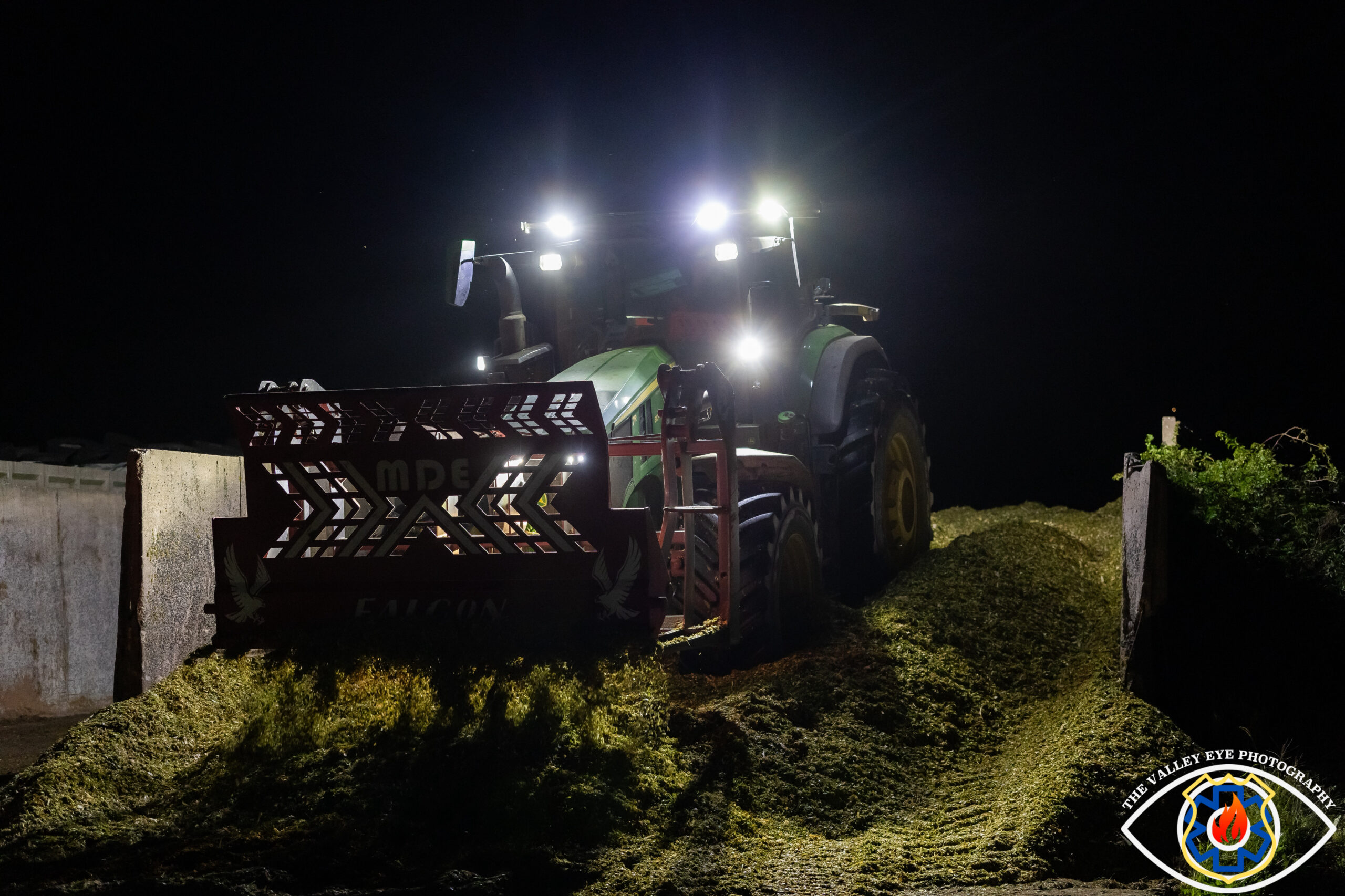
After the silage reaches its fermentation stage the silage becomes a high-energy, easily digestible and plantable feed. The whole corn plant supplies lots of energy to support milk production.
From the leaves, stalk and even the cob of corn, once it completes its fermentation process it provides rich nutrients, sugars and fibres to support the production and overall health, in this case of dairy cattle but even in beef cattle for other operations.
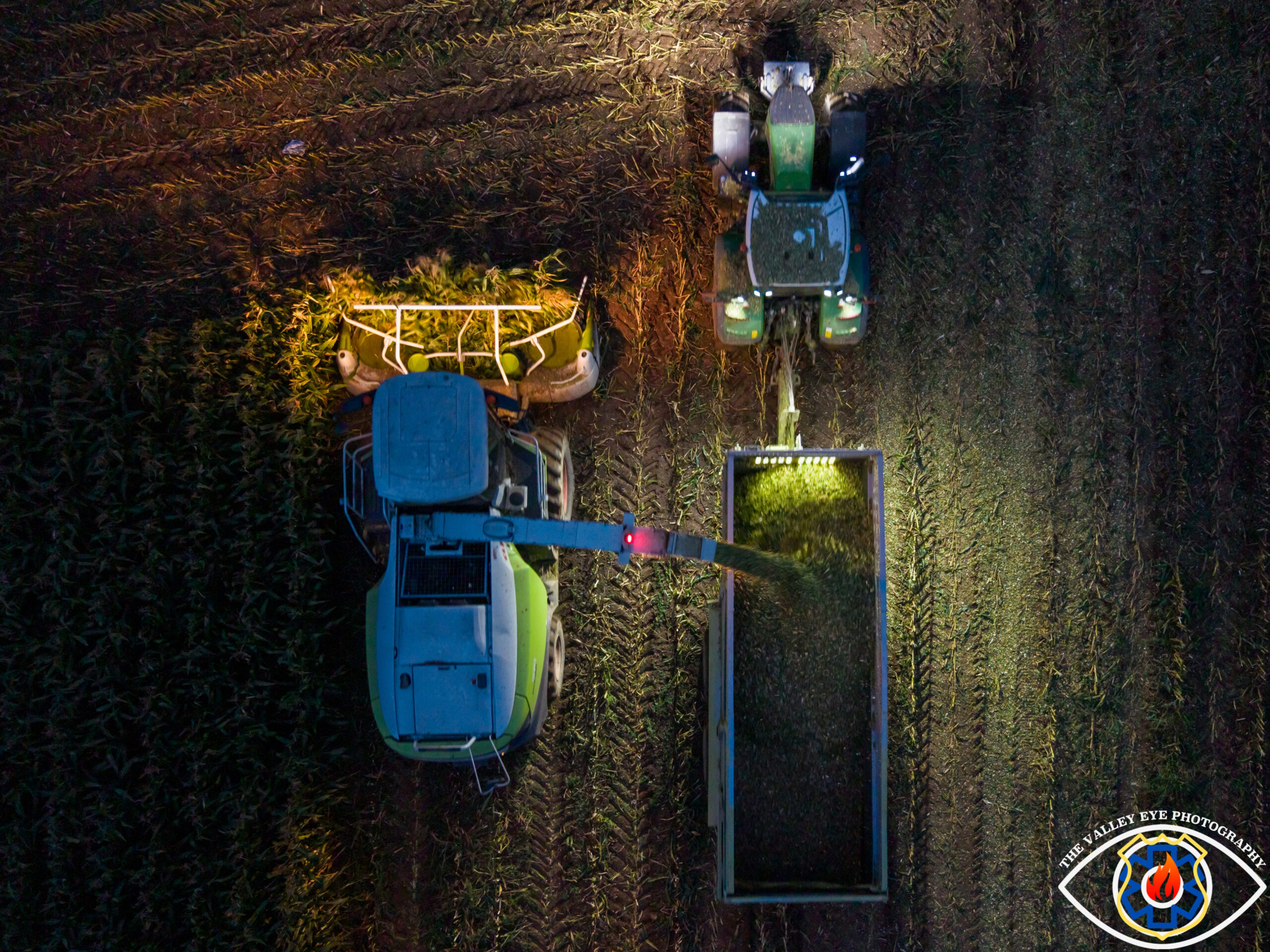
It was really neat to be able to learn this process, see the positive relations between different farms while chatting with the farmers from James R. Ward Farm Incorporated and Bishop Farms Limited!
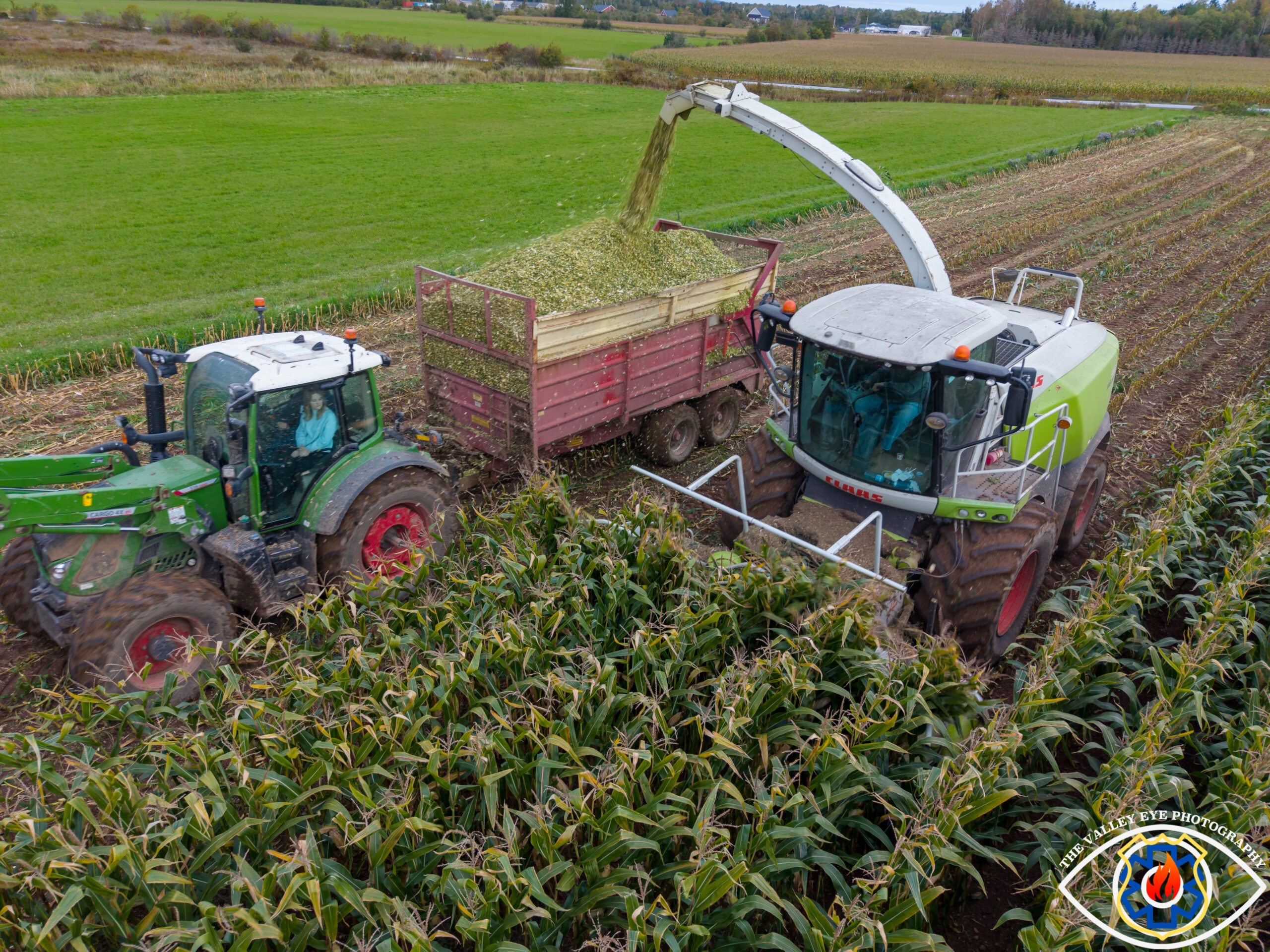
Photos attached were taken of corn silage being harvested by Bishops Harvester and photos snapped of silage being stored in bunkers silos at the Wards Farm!
Adrian J.