
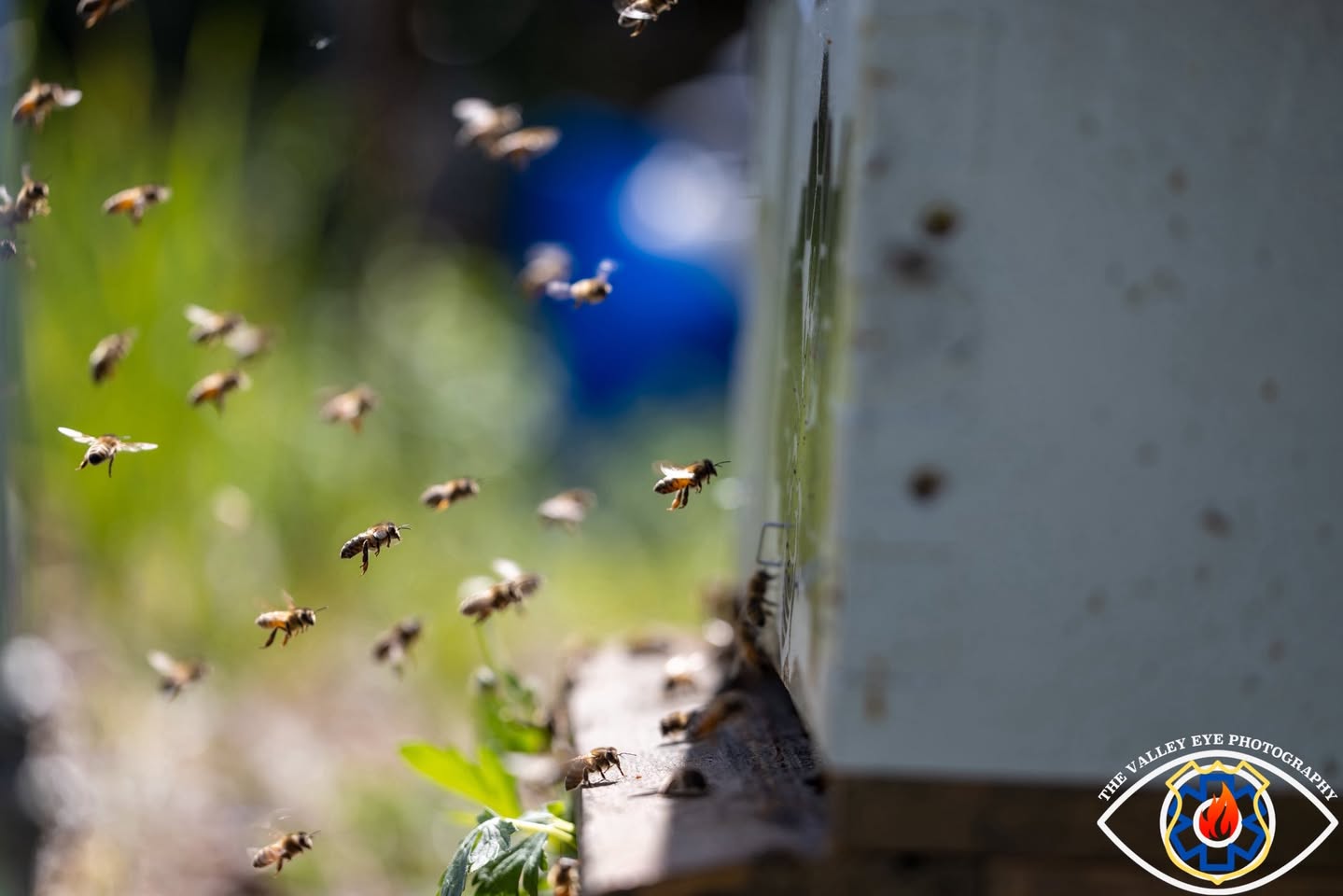
Honey bees are critically important to Nova Scotia’s agriculture sector, boosting yields while making crops successful for harvesting each season in the Annapolis Valley.
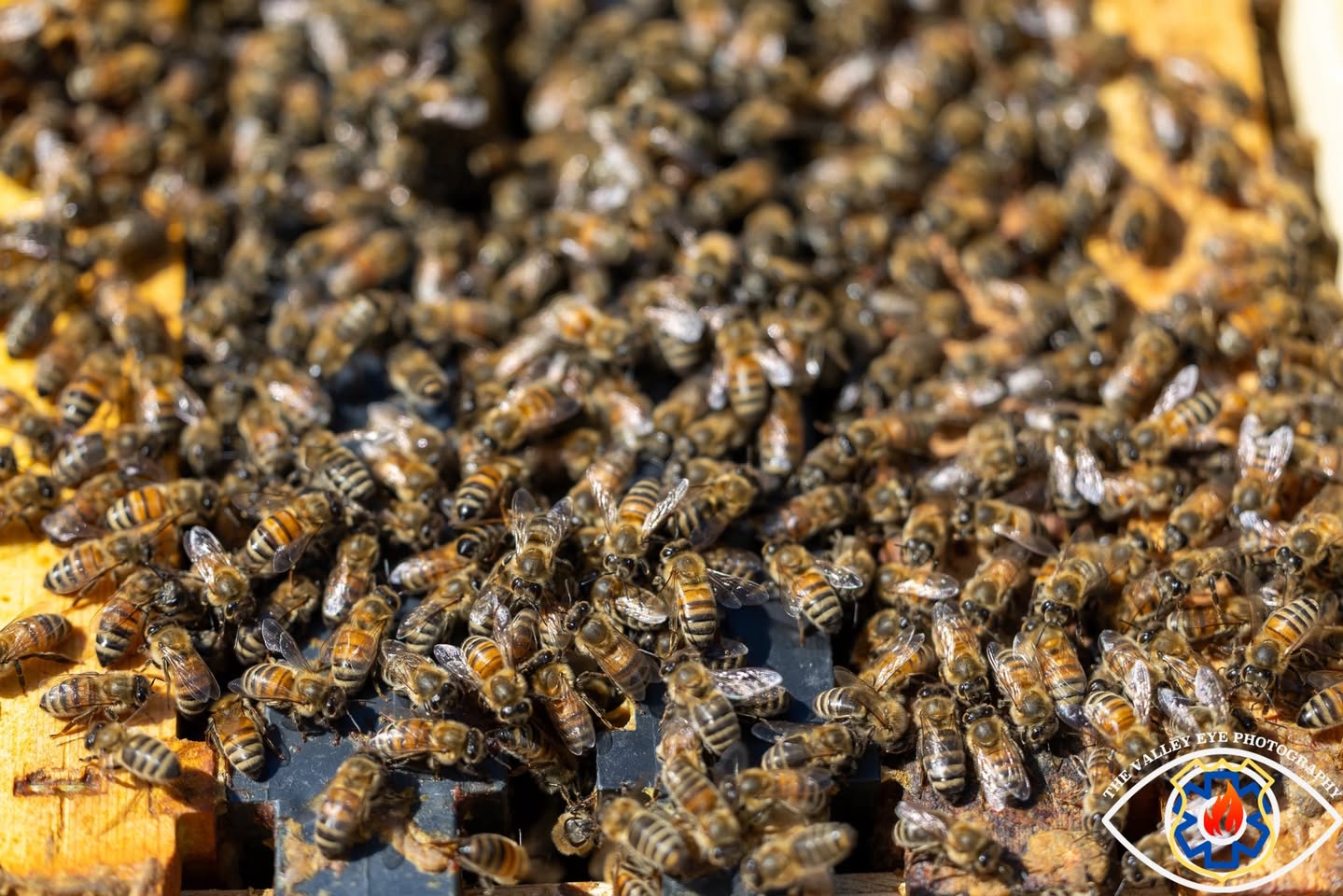
There are many beekeepers across the province who work on large scale numbers but there are also back yard keepers who also play critical roles in our communities.
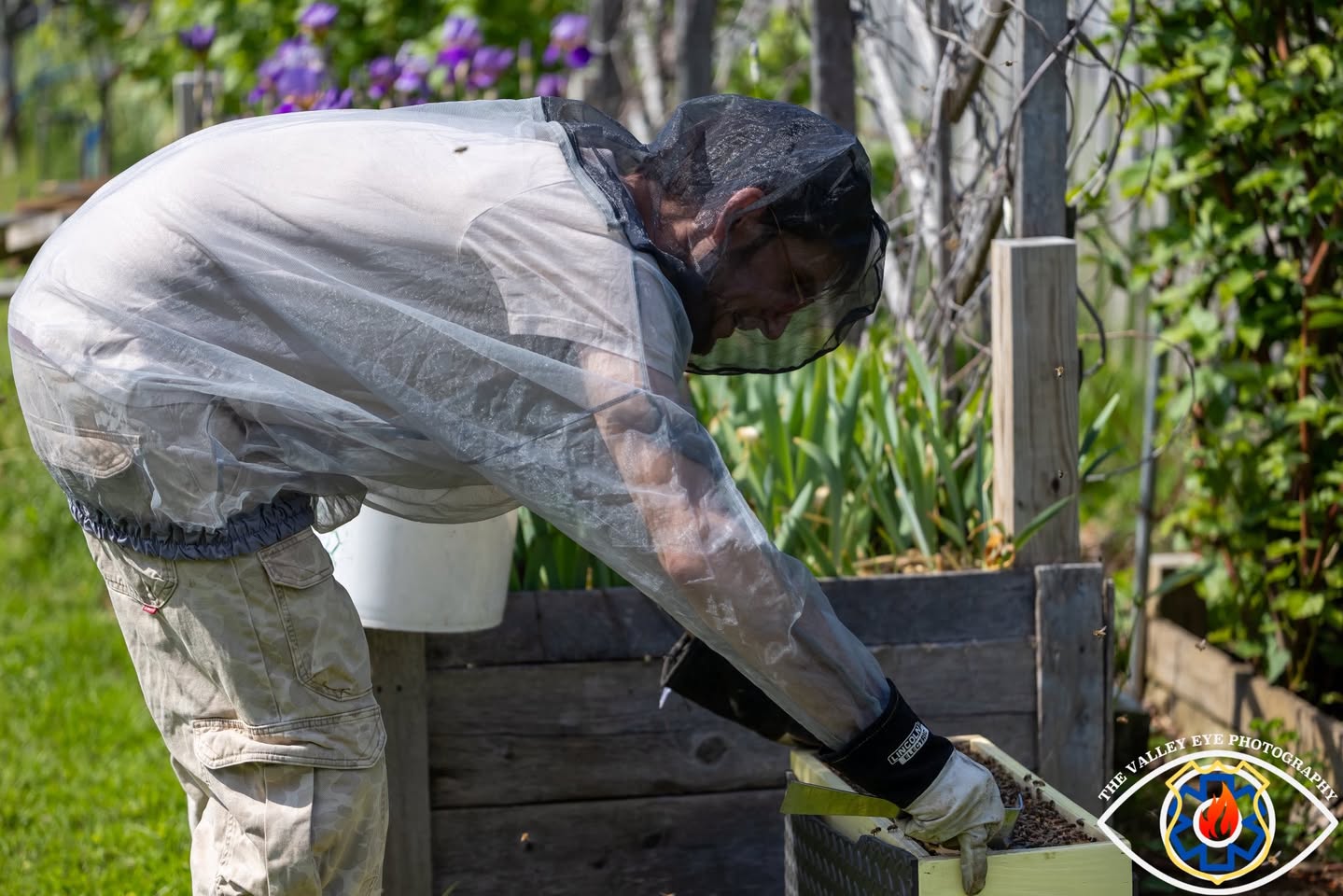
I had the opportunity to drop by Brent & Dees with Burnie’s Bees who are hobbyist beekeepers while they were introducing a queen bee to a split hive today in Waterville!
When one healthy bee colony is thriving, beekeepers will split the hive, taking one overpopulated hive and turning it into another one. This process can be tricky, it requires a new queen to be in charge of the split hive and in some cases, the colony may not accept the introduced queen.
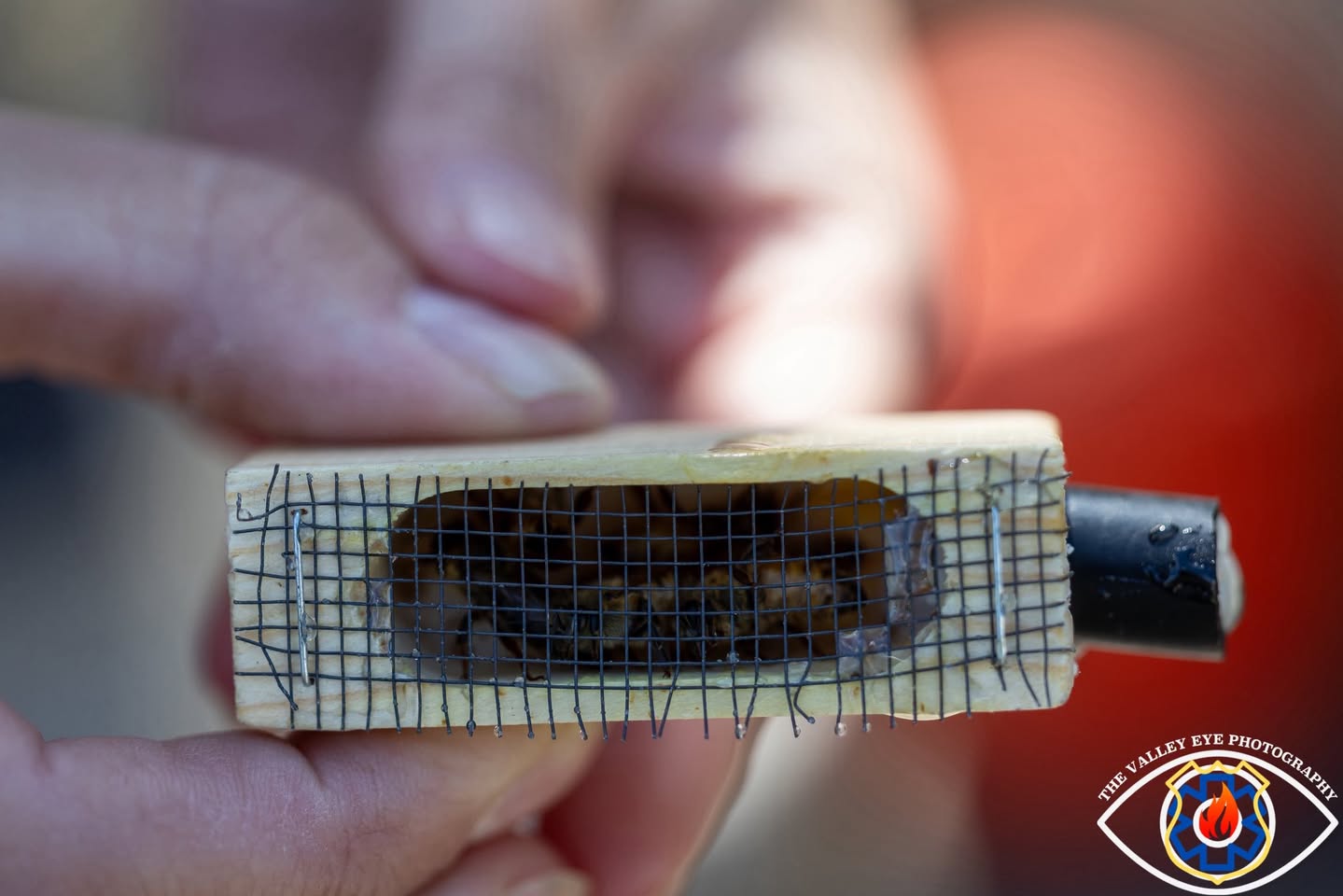
Queens are outsourced, from all across Canada and require strict permits and regulations to bring them into Nova Scotia.
Brent and Dee are slowly getting their feet off the ground, after starting this journey last year. They are using their hobby to improve pollination for their garden while supporting local bee health!
“This spring, we completed a major step forward for bee genetics in Nova Scotia. We introduced a Saskatraz Queen Bee – the first time this line has been brought into the province.” Brent with Burnie’s Bees
Saskatraz queens are unique and known for traits that matter here in the Annapolis Valley including being bred for extreme Canadian winters, high honey production and superior resistance to varroa mites.
Their strong overwintering ability, helps get through the cold temperatures during the winter months ensuring the colony is thriving come spring.
Saskatraz queens are bred to also have an improved natural resistance to varroa destructor mites which it turn can kill a whole hive.
These mites are responsible for almost 60% of colony losses worldwide, and most beekeepers rely heavily on chemical treatments to protect their colonies.
Burnie’s Bees wants to take another path one that steers clear from chemicals, relying on selective breeding, natural resistance, and letting strong genetics spread through the local drone population.
“Our long-term mission is simple: to build treatment-free, resilient colonies by focusing on strong genetics instead of chemical interventions.” Burnie’s Bees
It’s interesting to see this process up close!
Big thanks to Brent and Dee for sharing their hives and process.
Adrian J.